h1

Stephen Paints a Picture – Part Nineteen

December 26, 2013

7 September 2013

Stephen Scott arrived at my place after Saturday morning’s farmers market, and having had our, now traditional, Friday night lobster dinner and was keen to get to work on our portrait project although we had worked the day before, “I’ve been thinking about it and I do know what art is about,” he announced. “Do tell?”, I said. “It’s about being true to yourself, not following trends and always being behind,” he said. “Did all of this come from last night’s two bottles of wine?” “Don’t be such a shit. I’m serious.”

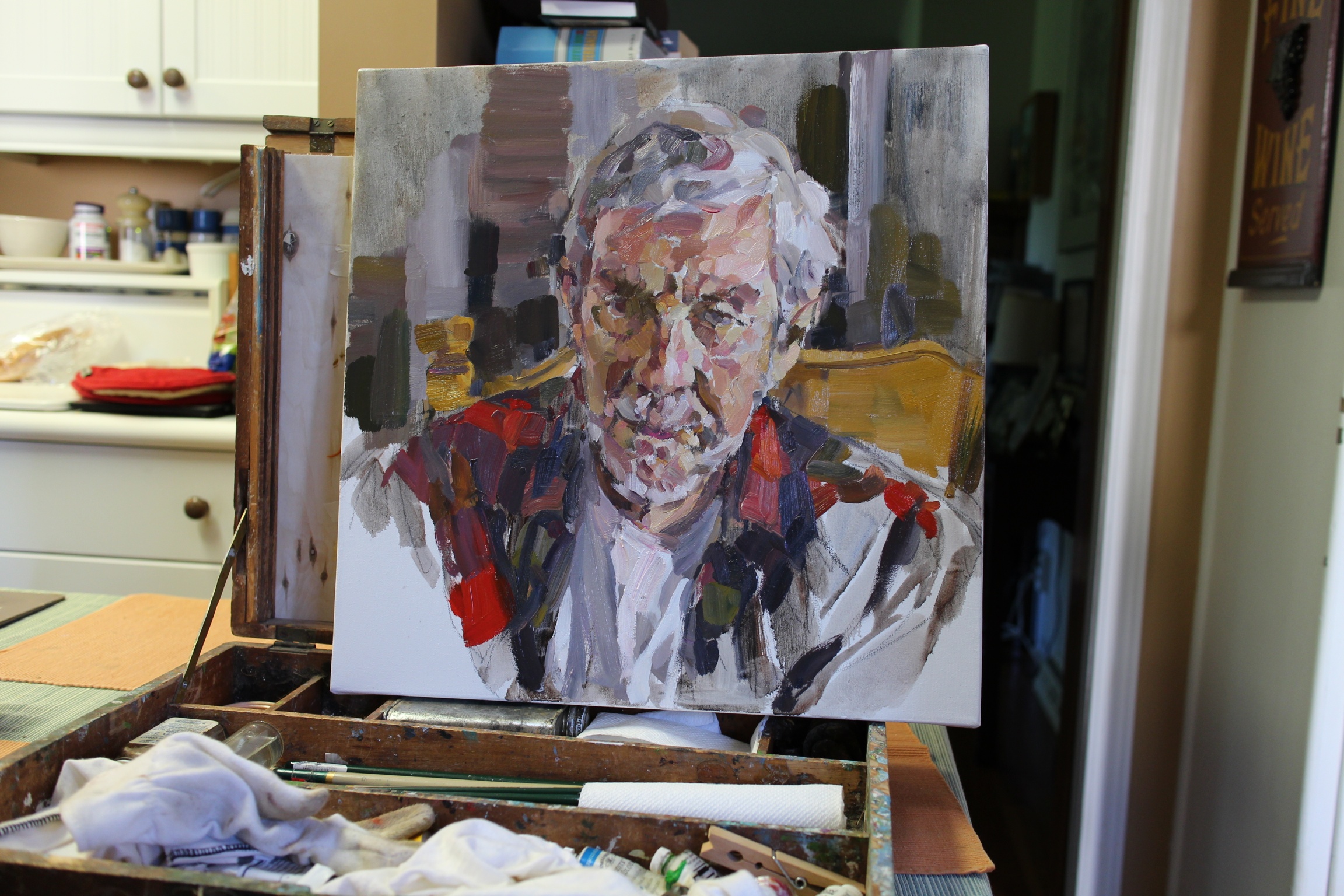
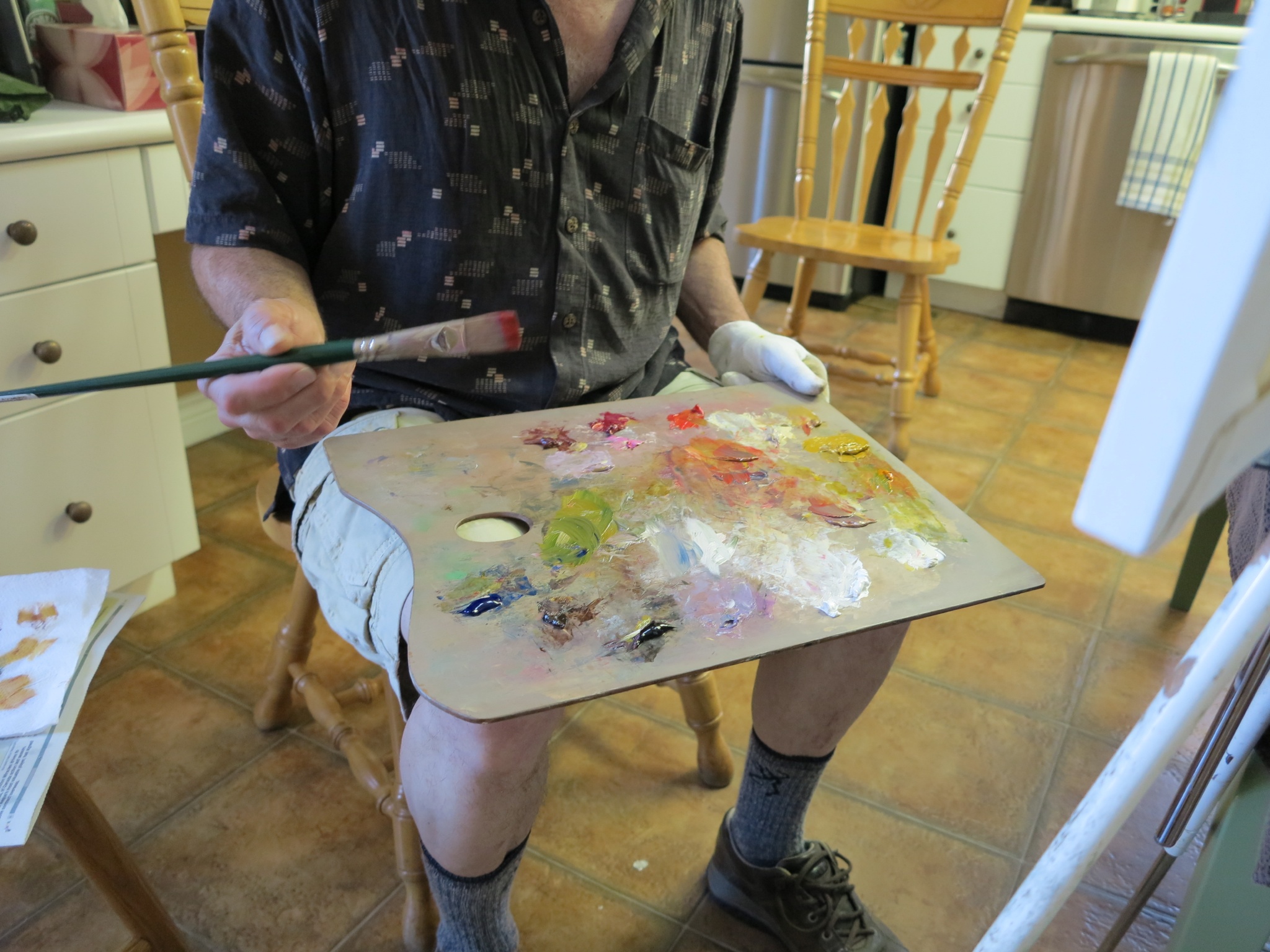
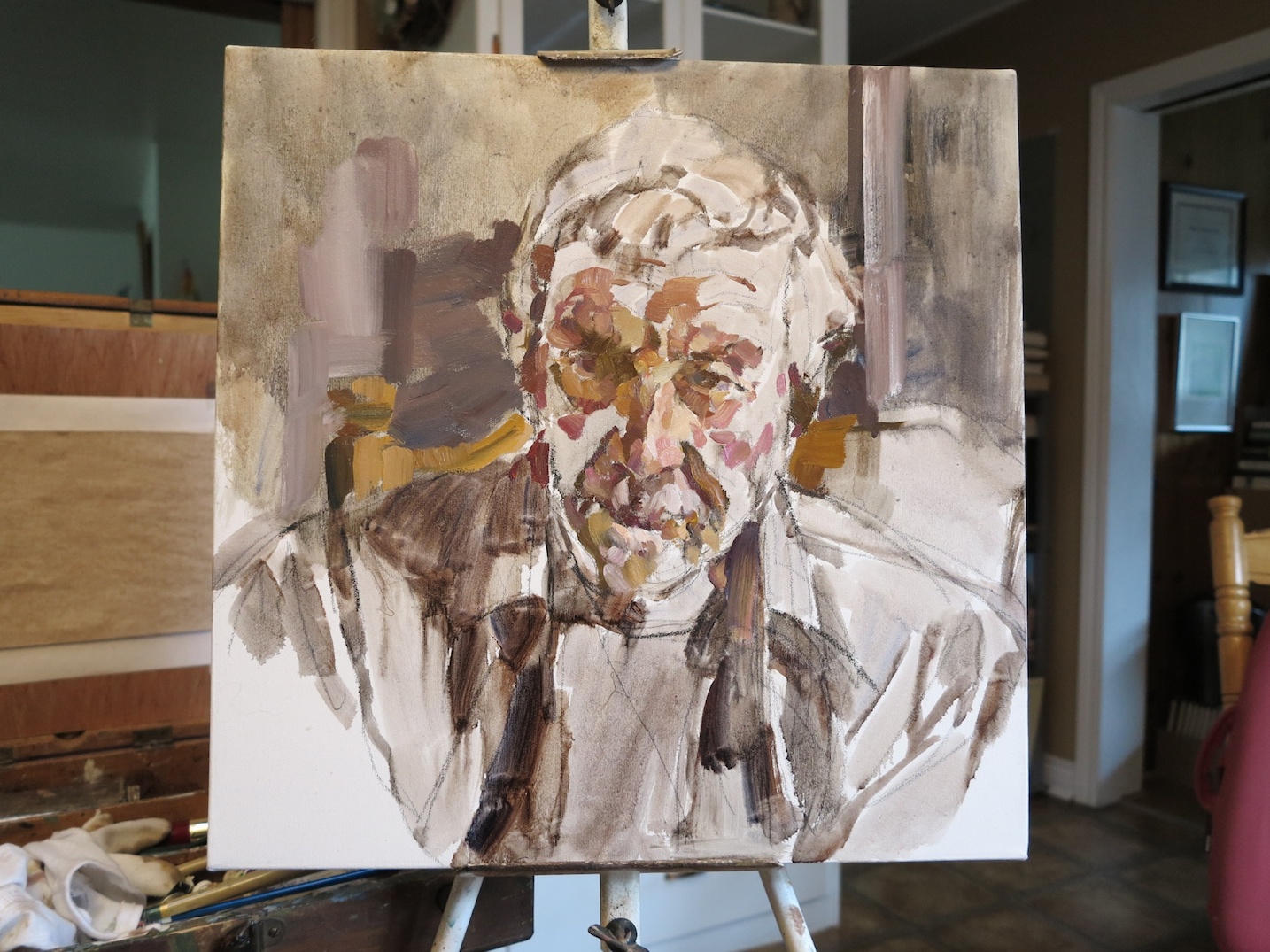
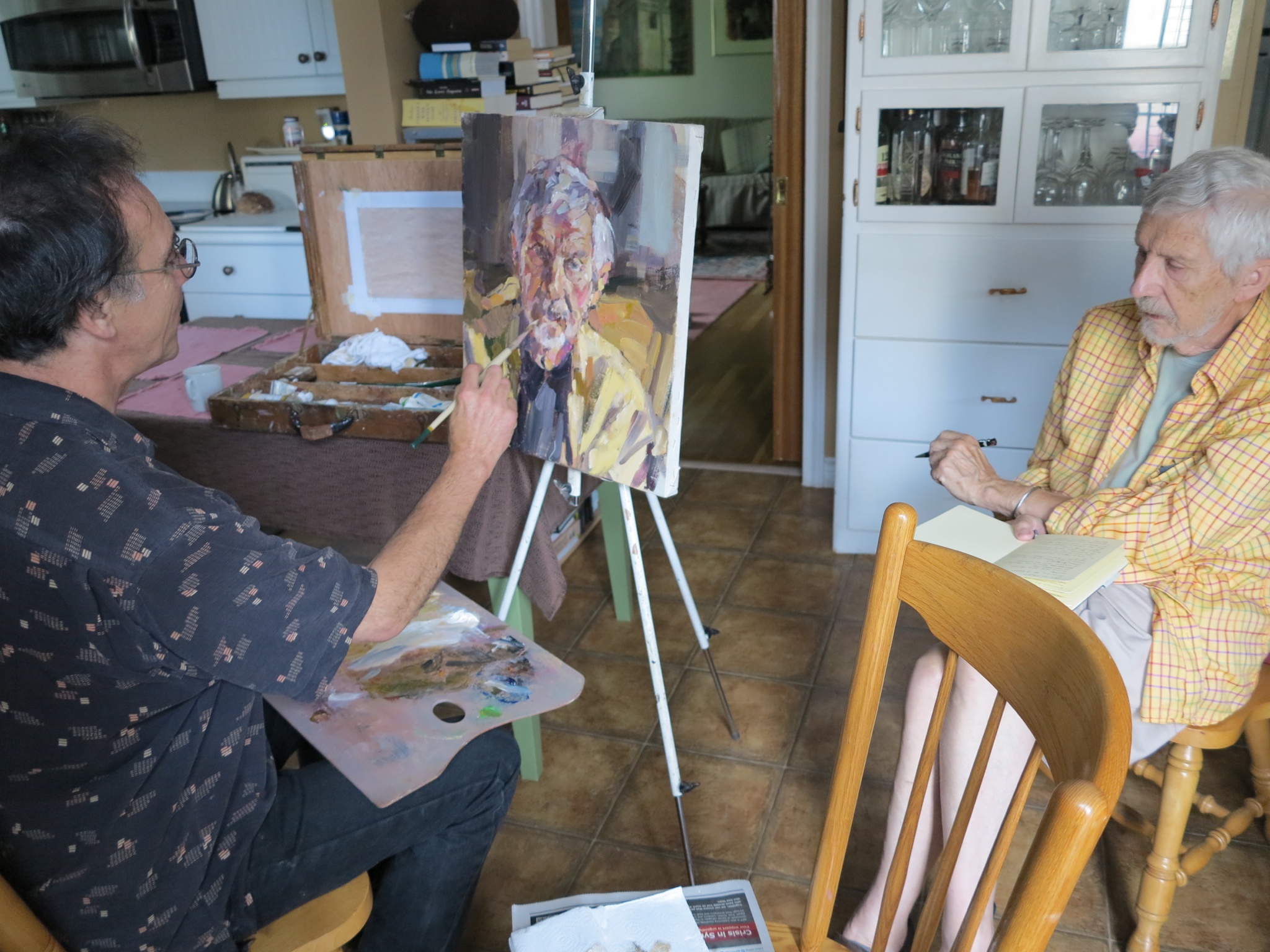
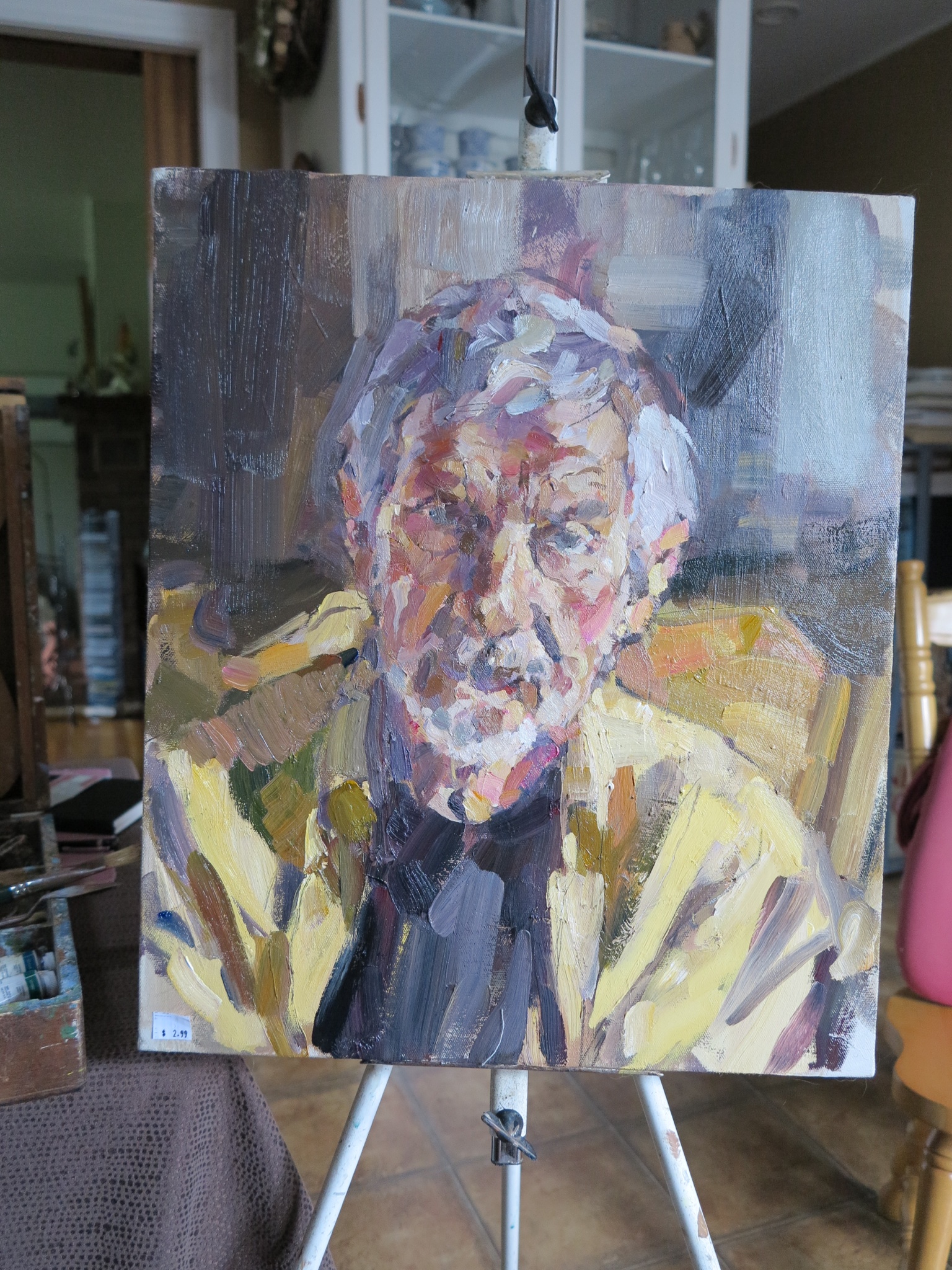
palette and portrait 7SeptHe started working on the first oil sketch, changing the shirt colour from red and blue to yellow, the colour of the shirt I was wearing today. We were talking about our idea of a new method of marketing his work and, perhaps, some other artists that we both knew using technology to reach a world wide market. “How do you think we should choose the artists?” I asked. “We need to start small. No more than three or four people,” he answered, “people we both know.”

“Granted. I think that it’s important that they can all get along, know each other. At least at the start. More important than everyone painting alike. They don’t all have to be realists, just good,” I said.

“A group of artists can be messy. Too many egos getting in the way,” he said.

“That’s why it’s important that you have somebody riding herd and, in this case, that would be me, but and it’s a very big but; the artists have to be in charge. It’s me working for the artists, not the other way around.”

“That’s a tall order,” he said, “rather like the chickens being in charge of the fox.”

“What I’m thinking is a co-op. There are a lot of co-op models around. The members hire a professional manager who runs the business, but the business belongs to the members,” I said.

“Sounds a little too idealistic to me,” he said.

“I think that it can be done, but it requires a lot of thought. It’s something we can work on over the winter. Surely there’s a way. It’s got to be better than what’s going on now.”

“OK, let’s leave it for now and concentrate on this damn painting.”

Playing with his brush, Stephen added, somewhat remorsefully, “Artists are a self-indulgent lot.” “And what do you mean by that? If they weren’t they wouldn’t be making art, they would be doing something useful like selling insurance.” “Very funny, I was being serious. Artists are using their art to communicate and make contact.” “Contact with who?” “People like you, stupid.” I thought that the painting and the conversation were going along swimmingly. We had three oil sketches on the go and by going back and forth between them, they were all, to my mind, looking pretty good, but I knew that Stephen had his doubts. He always has doubts and that’s what makes him a good painter. “Sooner or later, it should all come together,” he muttered. I knew that somewhere in his mind he a had a good idea what the final product would look like. It’s the same with writing. I know what I want, if only I can get the words to co-operate. There are in my head somewhere, I just have to spit them out.

“Paintings speak for themselves. Take cave art, we don’t know who did them, or why, and we don’t care. The images just are. I don’t like to get in the way of my art,” he said.

“You’ve got a point, but for a painting to be a painting, somebody got to paint it. I agree that I would rather look at a painting than read an artist’s statement.”

“Artist’s statements are usually the product of an art school education,” he said.

“We both should know as we both went to art school and I taught you. Actually, I don’t seem to remember writing one as an undergraduate, but that was fifty years ago. I didn’t do much in art school then, but paint and draw. Did do a piece of shit writing in grad school, though, for my defence.’’

We were listening to Bizet’s Carmen on the radio, he was drinking coffee and painting and I was drinking coffee and trying to pose and take notes all at the same time. “I’m going to miss these sessions,” he said, “but I’ve got to get back to Fredericton and Sophie (his wife) before she forgets about me.” “We’ve got a couple more days to get some work in. Then I’ve got to write all of the posts. I’m going to try to keep up the schedule of one every week on Wednesday mornings. Shit, that should take us to the end of the year.”

“My next step would be a re-invention of my work.” Stephen remarked, seemingly out of nowhere.

“That’s interesting as I’m trying to re-invent myself as well after all those years in the wilderness of local politics. In my case, it’s going back to where I was, both as a writer and photographer.”

“Me? I think that there is a lot of bad landscape painting out there and I’m not sure that I want do continue in that vein.”

“I keep telling you, don’t throw out the baby with the bathwater. You have a nature gift for landscape.”

“Good landscape painting is all about mood, but that’s not enough,” he said

“And what would be enough?”

“I’m not exactly sure, but good art has to speak its own language.”

“You know,” I said, “I’m not really sure who we should be speaking to. I mean that there are a lot of bad people who like good art and good people who don’t give a fuck about art.”

“Perhaps, we should start with ourselves. If we can’t talk to each other as artists, I doubt if anyone else would give a damn,” he said.

“You do have a good point, you know, I am all in favour of art for art’s sake and artist’s artists, but you can’t ignore the viewer. I mean, we need a public, eh?”

“I’m not suggesting that we don’t, only that there is a sub-text to art that’s mostly invisible to non-artists.”

“It’s the visible stuff that sells, my son,” I answered.

“I’m not sure of that, look at all the Postmodern crap that seems to move at art fairs and the like. People with a lots money are buying the emperor’s new clothes and what could more invisible than that?”

“Yes, I have seen some high priced rocks and dirty underwear passing as art, but what they’re buying is status or laundering their ill-gotten money. Actually maybe they are just plain stupid.”

“Would that we could find the way to cash in with these people,” he said.

“Not a chance and, besides, what you do still takes too much time. Look, we’ve spent two months and, god knows, how many sittings and still haven’t got to where you want to be.”

“What I want right now is a beer. Let’s stop for today and head on down to Ducky’s,” he said, putting down his brush, “It hasn’t been a bad day’s work.”

© Virgil Hammock, Sackville NB Canada, Monday, December 23, 2013.

h1

Stephen Paints a Picture – Part Eighteen

December 18, 2013

6 September 2013

Stephen Scott brought his dog, Echo, over to my place because she gets lonely when he leaves her alone now that Sophie, his wife, has gone back to Fredericton. So now we have three dogs, my two, Clover, Kara and his, under foot as he attempts to work on my portrait. He is also here a hour early, one PM instead of the usual two, as we are running out of time and he needs to leave Sackville in a couple of days or so.clover dog

“This damn tooth infection is getting me down. It just won’t go away,” he tells me. Stephen had problems with a tooth ache for the last little while and it has been, in addition to be being painful, a bit of a worry. “I’m going over to Amherst for some tests.” “Don’t worry, I’ll go with you. I love to sit around hospitals. It’ll give me a chance to catch up on my reading. I’m sure it’s nothing,” I assure him.

In addition to the three oil sketches already in progress, he has brought over a larger, 36”x 42”, canvas on which he had already done some drawing. “I didn’t know how to start the drawing on this sucker yet,” he said referring to the big canvas, “but I am sure that it’ll come to me.” Our plan had always been to do a larger painting and now, at least, we had the canvas. He starts painting on one of the earlier oil sketches.

“This one I eyeballed a bit, but the drawings helped.”

“How did you know they did?” I said.

“Well, it’s working to a happy conclusion.”

“Yeah, it’s looking pretty decent,” I added.

“What I’m trying to see is the finished product—at least in my mind’s eye,” he said, adding a bit of paint to the tip of my nose on the painting.

“You know what we’re doing would make a damn interesting show. I think I’ll call Terry (Terry Graff, the Director of the Beaverbrook Art Gallery) and see if I can interest him,” I said, “What do you think?”

“Sure, what the hell.”

“Done. I’ll give him a call tomorrow.”

“I’ve been thinking, an artist that I really like is Miller Brittain. I don’t think that he’s noticed as much as he should be. He was a first rate painter,” Stephen said.

“It’s a classic case of being in the wrong place, Saint John, at the wrong time, the Depression,” I replied.

“Being in Saint John is always the wrong place,” he said.

“The Maritimes sort of sucks as a place for people with money to buy art and, in particular, good art by local artists. Any big money goes elsewhere like Toronto or New York to buy their goodies and I am not sure that the big local money buys that much art in the first place,” I said.

VH1 6SeptStephen had changed the oil sketch he was working on to an earlier version and was banging away at the surface with his brush. “I can see where I went wrong with this baby,” he says, “It was early in the looking process.” Painting a portrait from life is really all about looking and looking hard. This is something Stephen does all of the time he is working on a portrait. “You almost have to live your subject,” he comments and we have certainly spent a lot of time together this summer both working on the project and socially. I feel that he has really got to know me and this is showing up in his drawings and painting of me.

“You’ve got to make mistakes sometimes to get it right,” I said.

“Right, and you do need time to reflect,” he added.

“It’s rather like me, I always need a second eye to look at the stuff that I write. I send my work to Claudia (Mannion) and she finds all the crap I miss. She’s a good copy editor,” I said.

“Sure, it’s a good thing to have people you trust look at your work and give you their honest opinion, but in the end it’s your stuff you have to stand by come hell or high water.”

“That’s interesting. A friend of mine, a Toronto art critic, was complaining to me about the total lack of negative reviews in mainstream art magazines and newspapers and, in particular, when so much contemporary art is shit.”

“It’s all about advertising. Bad reviews and the galleries pull their ads,” he said.

“I hope you’re right, because if the critics, and I use the term loosely, actually believe the crap that they’re writing, we’re in trouble.”

“Of course, the big factor is money and there appears to be lots of that. If you can talk some dim bulb to part with thousands of dollars for a pile of dirty underwear, then you have a great scam and having it backed up by critical writing, so much the better,” he said.

“Did you know that the TLS (The Times Literary Supplement) gives a prize every year for the worst, most obfuscated writing, and it’s almost always won by someone writing on art?” I said.

“I’m not surprised, but, hey, in all this conversation, I forgot why I was mixing these two colours.”

“I’m sure that it’ll come to you and speaking of colour, are you familiar with mummy brown? It was used by a lot of 19th. Century painters for background and the like.”

“Mummy?”

“Yes, it was made from ground up mummies and oil. In the end, it didn’t work out so well, as it was fugitive. Seemed like a great idea at the time, as there were a lot mummies around, not all people, by the way, as there were tons of cats.”

“Fascinating, but I think I’ll stick with earth colours.”

“Well, it’s one of those colours you can’t get anyway, but you’ve got to admit that I am a fount of useless information.”

VH 6SeptStephen was looking hard at the painting he was doing, “I’m thinking that frames are going to be important on these paintings.” Framing was a subject that had come up from time to time over the summer. “I make my frames myself as I consider them an important part of the picture,” he said. Frames do seem to be a largely forgotten art as many modern and contemporary painting are hung frameless or with minimal frames. Yet, for most of the history of painting frames were an integral part of the completed art works. Van Eyck, in the 15th. Century, beautifully painted his frames as part of his painting. The gilded plaster frames of 18th. and 19th. Century paintings contained the works in their separate worlds.

“I think that we had better plan on working tomorrow. What do you think?” Stephen said.

“Well, I’ve got nothing better to do.”

“Let’s stop and take a look at where we are. Maybe have a coffee and take some photos,” he said.

“Sure, I’m pretty happy with the way things are going. It’s certainly been a labour of love. All of this stuff has given me new faith in art which is something I thought I’d lost.”

© Virgil Hammock, Sackville NB Canada, Sunday, December 15, 2013.

h1

Stephen Paints a Picture – Part Seventeen

December 11, 2013

5 September 2013

It had been a few days since Stephen had worked on my portrait at my place. I asked him, when he arrived, about the last time he was here and our conversation about landscape painting. “Sure,” he said, “something to the effect that it was minor painting.” “And, if you remember, I said, that some of your best work was landscape and you were selling yourself short. Did you read that short forward to your show at the Yellow Box Gallery (in Fredericton) that’s going up Now?” “Yes.”

“Well, let me read it to you now. It’s short. Only three hundred words. It bears repeating.”

“Stephen Scott, as you can see from the paintings on the wall, has both a fine eye and hand. These small paintings speak elegantly to the long tradition of landscape painting. He is a plein-airist which simply means that he often paints directly from nature and that gives value to the immediacy of his art. Stephen is also an unabashed romantic and that, in this time and age, is a very good thing when so many of us are trying to be pragmatic about everything in our lives. One needs to step back and view the world in front of us as something wondrous; Stephen does.

Our relationship to nature has changed over the centuries from the fear of the unknown to the celebration of its beauty. Before the urbanization of European and North American society, nature could be a dangerous place where dark things could, and did, happen. Early landscape art reflected these feelings by showing nature as a place best avoided or as a background to human, generally religious, events and, at times, reduced to visual, stock, clichés. However by the mid-17th. Century, landscape painting came into its own as a reflection of the emerging values of humanism. During the 19th. and early 20th. Centuries, landscape painting came to optimize Romantic sensibilities. Today there seems to be little mainstream interest in landscape art perhaps because it does not fit readily into the Postmodern mode except perhaps as a vehicle for irony. Back to Stephen as a romantic–he paints landscape as a window to an understanding of nature, as a thing of beauty. There is no irony in these paintings of the west coast of Newfoundland, only his sense of that what was before his eyes waiting to be discovered by him and now shared with us.”

“Do you agree with that?” I asked.

“It’s hard to disagree, only a lot has changed since I painted those pictures, in particular, my thinking.” he said.

“All that I am suggesting is that you don’t throw out the baby with the bathwater,” I said, “You have a gift for landscape painting.”

“Enough of this stuff, let’s get down to work. Time is running out. I only have a few days before going back to Fredericton.”

“OK, so what’s the plan?” I said.

“I’m going to do my very best to finish the three oil sketches and then give the cartoon (the drawing on the large canvas) a shot.”

september paletteHe was working on the third of the oil sketches, “Mars violet, isn’t it pretty? Love these colours (his palette). Just like candy.” It was a dull day and he had bounced a flood light off the ceiling and turned on the light over the kitchen sink. We hadn’t much choice as time was running out and the weather had been bad for the last three or four days. “I hate working with these lights. It screws up the colour,” he said.

“The first thing you pick up is the emotional tone of a work. That’s something I learned from Cézanne,” he added.

“Well, Cézanne is a pretty good role model, but the first thing that I look at are the technical aspects of a painting and only then, at anything else.”

“I go with a gut feeling as did Cézanne,” Stephen said.

“Guts aside, both you and Cézanne are pretty good technical painters.”

“Let’s not compare me with Cézanne, but seriously, people who look at my paintings who know me see them differently than those who don’t.”

“So, the trick, if you are going to make any money out of this racket, is to get to know more people and that’s where I come in.”

“And what are you going to do?”

“It’s already happening. Lots of people are reading my blog posts about our project. The answer, my friend, is written on the web.”

Stephen and I had been talking all summer about a better way to market art than through the traditional gallery/artists model. Communication is now worldwide and instantaneous. The question is how do you use these new technologies to market something as material as painting in a way that is beneficial to artists. With new technologies there should be new ideas. Artists should be able to deal directly with buyers be they across town or halfway around world.

“Somehow, I can’t visualize the look of it. People want to see the real thing before they part with real cash,” Stephen said.

“Of course, but there are ways around it. Artists need agents just like musicians who work on their behalf worldwide and its a very different role than is currently being done by dealers and galleries.”

“I’m game, but where do you start?” he asked.

“Small. It’s something we should really look into this fall. Perhaps we could find two or three artists here in New Brunswick who would be interested. I have some friends here who really know their way around the web who might be interested to help.”

“OK, but let’s get back to work.”

“Sure, but tell me, do you remember the first painting, or close to it, that really turned you on?” I said.

“One I remember, from when I was young, is a copy of a Winslow Homer painting at the Beaverbrook Art Gallery, After the Rain.”

“Homer was quite the painter, especially his watercolours. How about something later and original and not a copy.”

“Picasso’s Three Musicians. It’s so loaded. So much expression,” he said.

“Weird, that’s a painting that knocked my socks off too. I remember when I first saw it at MOMA in 1956. I was in New York awaiting shipment to Korea after finishing the US Army photo school in New Jersey. Changed my life, I think.”

“Yeah, he just nailed it, didn’t he? A couple of other artists I like are the Pratts and David Blackwood. It’s a Newfoundland thing, but, on the whole, I think that Tom Forrestall is a better painter.”

“Well, I should get you down to Halifax, really Dartmouth, to meet Tom. I am doing some work on him and I have known him for years.”

“I would like that.”

We agreed that we had better try and work every day until he leaves for home, but I might end up having to go to Fredericton for a couple of sittings as well. “I think this is all going to turn out well after all,” he said. “I couldn’t agree more. I think we will both have our fifteen minutes of fame.”

“That’s fourteen minutes more than most people get,” he added.

VH 5Sept

© Virgil Hammock, Sackville NB, Canada, Sunday, December 8, 2013.

h1

Stephen Paints a Picture – Part Sixteen

December 4, 2013

31 August 2013

It was Saturday and Stephen Scott and I had already met at the Sackville Farmers Market for a cup of coffee at the Black Duck Café and after the usual postmortem of last night’s dinner, lobster, again, we decided to continue his painting of my portrait in the afternoon at, as usual, my place. Sophie, his wife, had left to go back to Fredericton and her teaching job after spending the summer in Sackville. Stephen had found another place to live for the next couple of weeks so that we could keep working on our project. So, at 1:45 he was knocking at my door.

“This new place of mine is really depressing. Even Echo (his dog) doesn’t like it,” he said, “I don’t know how long I’ll be able to stand it.”

“Ah, but you still have me.”

“I think I would rather have Sophie.”

“Absence does make…”

“I know, make the heart grow fonder, but that’s bullshit,” he said finishing my sentence.

brush and paletteBullshit aside, Stephen noticed that he was running short on flake white paint. “I am going to have to dig some more up on Monday. It’s pretty key to my work.” He did pull out a new tube of mars yellow from of his paint box. “This might help with the lights,” he added. By lights, he was referring to the lighting in tone of the colours in his palette. He was working on the latest of the three oil sketches, blue and red shirt, white t-shirt, “I’ve got to find a good place to start. Look for the darkest and lightest spots. It’s a matter of play after all.” I suggested that a good light spot would be the tip of my nose and the darks would be my thoughts, but that he couldn’t paint them. “I don’t know about that,” he said, “I hope that my painting shows more of you than just the surface.” I assured him that my remark was only a lame attempt at humour. The nature of a good portrait is about both the sitter and the artist. Think of the portraits of Rembrandt and Goya and what they tell of us of their subjects and themselves. I really think that Stephen’s oil sketches of me are going far beyond any photograph in capturing me warts and all.

“Do you think that it’s important that the colour of your palette (the board on which places his colours) is the same as ground (the blank surface of the canvas),” I asked.

“I suppose so, but I am working with a white ground, but just the same, it’s good to have the colour look the same on the palette as it does on the canvas,” he answered.

“That’s why I asked. Because when I painted portraits, I tended to use a middle value ground, usually green or brown and it was important that the palette was a mid-value as well. That way I could work both ways. Middle to light and light to dark.”

“That’s very old fashioned. Most artists from the Impressionist on worked on white grounds.”

“I never claimed to be up to date. I rather like being old fashioned and you aren’t exactly up to date yourself. Walnut oil?” I said.

“But, you can be fresh with an old idea,” he replied.

“I can’t deny that old chestnut or, should I say walnut. There are very few really new ideas in art and fresh is about as good as it gets.”

VH 31Aug2013Stephen was looking intently at his painting, “You’ve got some tricky passages in your face.” I wasn’t sure what he meant; most people just think I have my fair share of wrinkles. “What colour is your face?” he asked. “I haven’t a clue. Off white? Pinkish?” I said. “I really wasn’t expecting an answer. I was asking myself.” We had, as usual the radio on in the background, “Nice to work by opera. What is it?” he said. “Mozart, I think. Let me look,” I said looking at the readout on my streaming radio, “I was right. It’s Bastien une Bastienne. A very early work, and I do mean early, by him. He was twelve” “Nice, all the same,” he said. “People like that really piss me off. When I was twelve, I was still playing with marbles,” I said. “Thank God, there aren’t many people like that. Most of us just have to bust our balls to do anything that’s remotely nice. Got to agree that geniuses are few and far between,” he added. This sort of brought up again, the question of raw talent versing hard work. We agreed, early on, that it would be best to have both talent and hard work, but the subject keeps coming up.

“I don’t know what to think about landscape anymore. It lacks the human condition and it’s easy to fake,” Stephen said.

“Christ, Stephen, you’ve spent your whole life painting landscapes and, I might add, good ones.”

“Still, I am reluctant to show them.”

“I wouldn’t go there. They are your bread and butter and besides, as I said, they are damn good. Let’s stop for coffee and think this out.”

We drink a lot of coffee during our sessions as it keeps both of us on edge and, in my case, awake. “It takes a major study for a major painting which I hope will be the result of all this work,” he said. “Look, I think these oil sketches are pretty nice on their own as are the drawings. It’s been a good summer’s work. Mind you, a honking great painting of myself wouldn’t be bad. Generations to come will say, who in the hell is that funny guy in the Scott painting?” “That’s assuming that either of us will have a place in history or that there is a future, period,” Stephen said.

Back at work, he remarked, “I love the feeling of paint, but it’s got to be right.” It was one of those remarks that only makes sense between painters as painting is such a physical activity. It is the act of painting rather than the product that drives printers to continue paint. “I keep going back to Colville all the time. It’s all about location. If I was in London, I’d be thinking about Stanley Spencer,” he said. “Well you are in my kitchen now and we’re in Sackville. How’s that for a location? Any different from any kitchen, anywhere?” I asked. “You are always where you are even if it’s only in your head,” he said. “I don’t know about a typical Canadian portrait unless I was wearing a plaid shirt and toque, eh?” “Maybe, I should get you to wear a toque,” he said. “Yeah, we could call it The Portrait of Jack Pine.”

“Speaking of Canadianisms, we have to stop painting as I promised Meredith that I would go with her to a friend’s cottage on the shore for some lobster,” I said. Even though, I have lived in Canada for the last forty-six years, I have never figured out the cottage thing, but I do like lobster. “OK,” he said, “I can work on some of this stuff at home.”

cabin

© Virgil Hammock, Sackville NB Canada, Sunday, December 1, 2013.

h1

Stephen Paints a Picture – Part Fifteen

November 27, 2013

27 August 2013

stephen scott toolsOnly yesterday, Stephen Scott was at my house working on my portrait and now he was back starting from where he had left off. “I really doubt that I can get this done in the time I have left,” he said. “We had this conversation yesterday,” I replied, “we’ll just have to do what we can.” I told him that I had a call from Will Forrestall (a former student of mine, along with Stephen, and also a painter) asking me to write a forward to a booklet on an exhibition at The Yellow Box Gallery in Fredericton of Stephen’s paintings done last summer in Newfoundland. “Yes, I spent five weeks around Port aux Basque painting a series of small landscapes. Bad beer, great people. The paintings are all on my website. I was to do the same sort of thing this summer around Sackville until we started this.” “You sure can’t tell what fate is going to drop into your hands, can you?” I said. The reality was that if I hadn’t by chance dropped into Ducky’s that first day Stephen was in town that lead to dinner and a conversation, we wouldn’t be sitting here doing this now.

He was busy painting again, looking intently in my direction.

“Next place I would like to paint is Ireland, but I would have to find the money or some sort of fellowship, hopefully both,” he said.

“Where there is a will there is a way. Must be something out there. The Irish like artists. They have great tax laws for artists. You would have to remember to bring a shit load of green paint.”

“There is always the hope factor. Give it your best shot and hope for the best,” he said.

“You’ve done pretty well with the hope factor. You’ve managed to travel and paint in some interesting places.”

Yes, but there are a lot of places I haven’t been and would like to be.”

“Listen, you’re going to make good art wherever you are. It’s about the artist, not the place.”

I thought I would throw a little art quiz at Stephen; “There is an artist that I haven’t talked about, that I like. Have you ever heard of Larry Rivers?” “Sure, great draughtsman.” “I think he was in the wrong place at the wrong time. Loved his take on George Washington a crossing the Delaware,” I said. “He was a Pop artist with a real talent in drawing and painting,” he added. We have spent a lion’s share of our time over the summer talking about what is and isn’t talent in painting both past and present. Art, history and criticism is full of loaded words and talent is one of them. It’s a minefield that blows up in your face more often than not, but both of us appear not afraid of blundering ahead regardless of our wounds.

“There’s a lot of history around painting and there’s more history to come. It’s not dead yet.” Stephen said.

“I sort of place what I call modern painting, to around the time of Giotto. Late 13th century, early 14th century,” I said.

“There was stuff before that.”

“Yes, but that’s where I would put the start of what we recognize as painting today—signed work by an individual and an individual who people, important people, saw as a genius or at least as important.”

“It’s back to the bit about the painting as an object, an object of value, isn’t it?” he said.

“It’s hard to get away from the idea about the stuff on walls. Windows of illusion to another world.”

“Illusion is the ticket and that’s what makes painting so important. It gives us a world that only exist is our imagination,” he said.

“Books and music can do the same thing. It’s all about stuff in our heads.” I added.

“Don’t you think there are important differences between painting, music and literature?”

“Yes, painting, in some ways is more real; at least realistic painting is. It’s taking something we know, something we see and putting it into another reality, three into two dimensions.”

“That’s going way back, to Greek philosophy, Plato” Stephen said.

“Right, but it doesn’t make it less valid. The bloody Greeks were on to something.”

“People have always had the need to make things, to interpret their reality. It goes back to somebody in a cave with a burnt stick in their hand trying to figure out what the fuck was going on in their world,” he said.

“And, we have yet to figure it out and, by the way, how’s the painting going? Am I looking good?”

VH 27AugHe stopped painting, I put on the coffee machine and had a look at what he was doing. “Is this picture any better than the last one?” I asked. “It’s not about better. It’s different. I think it’s better. Hopefully everything is adding up for the final portrait, but only time will tell.” Stephen was looking at the project from many viewpoints, many directions. There were drawings, oil sketches and, most of all, time, the luxury of time, to put things together in his head. Thus far we have had fifteen sessions of two or more hours each over a period of forty days since July the eightieth. To my mind, the art process is additive. You need time for things to sink in, for ideas to mature. When I tried to teach life drawing in a summer course over six weeks rather than over two terms of thirteen weeks each, the results were nowhere as good. The students needed the the year to get the information in their heads. That’s not to say that a quick thirty second drawing can not be better than a laborious three hour drawing. It’s the training and practice that lead up over the years to the ability to make a masterful thirty second drawing.

“I don’t know what keeps me going,” Stephen said.

“Perhaps, you can’t do anything else. I do what I do as it’s sign that I am alive and you do much more than me.”

“Does that mean that I’m more alive than you?”

“Many more people are more alive than me and many people, you included, have more talent than me.”

“It’s all about living in the now,” he said.

“Really? Do we have any choice?”

“No, because, even if you try to live in the past, you are stuck doing it in the present.”

“Sure, and the future is fucking impossible because we haven’t a clue what’s going to happen. So we might as well stick with the now.”

Stephen was trying to come to a conclusion to the afternoon’s work, “It’s not a carrot and stick for me,” he said, “I am driven from the rear, by art history, by all of those artists from the past.” His point is well taken, there is always the burden of the past. Artists who ignore art history are doing so at their peril. They may think that they are original, but, in fact, all art is a variation on a theme and that theme is art, itself. Of course, there is always ignorance and that’s a quality that many artists, past and present, possess. “The sooner you stop, the sooner we can get to the bar and have a drink before dinner,” I said. “If you put it that way,” he said putting his brush aside.

© Virgil Hammock, Sackville NB Canada, Monday, November 25, 2013.

h1

Stephen Paints a Picture – Part Fourteen

November 20, 2013

26 August 2013

“I think I’m going to stay a couple of extra weeks in Sackville, if I can find another place to stay. I really need more time to work on this project,” Stephen Scott told me soon after he came to my place to continue painting my portrait. “Guess you will need it,” I replied, “but the students are starting to filter back into town. I might be able to get up to Fredericton, but I sure as hell couldn’t do it every two days.” “We’ll just have to see how much more I can finish,” he said. He had with him a new small canvas that already had an image on it based on earlier drawings.

stephen paints 26 AugAfter I sat down to pose, Stephen began to block in colour on the new canvas. It was a dark day, but we needed to get on with the project regardless of the weather, so he had set up a flood light bounced off the ceiling. “I really don’t like using artificial light, but I don’t have a choice.” “Yes, you do have to be careful with the colour balance, don’t you?” I remembered that I replaced all the lighting in my studio with daylight balanced lights because I was tired of painting at night and returning to the studio the next day and finding the colour all wrong, but we did not have that luxury painting in my kitchen and we would have to wing it.

“When I go back (to Fredericton) I think my working methods will have to be adjusted,” he said.

“How so?”

“I really have come to understand this summer how important drawing is to my painting.”

“You’re right; if you can’t draw, you can’t do dick as an artist.”

“Another thing, there’s a certain aspect of resolution I require and that comes from drawing,” he added.

“Are you talking about control or detail?”

“A bit about both. That’s why I like studio painting say as compared to plein air painting for its control.”

“But you do both remarkably well.”

“I don’t know about that, but they both have their points. In the end, it’s all about producing paintings.”

All summer I have been ruminating about art with Stephen, really a conversation between two cranky old men, but in an attempt to outflank him with my obtuse wisdom, I have been rereading a number of old books on art history, theory and criticism. Last night I was thumbing through an old paperback of Herbert Read’s 1931 The Meaning of Art (The cover price was $1.45, so it should give you some idea when I bought it) and a thought suddenly came to me: “Stephen, I figured it out. You know, there are no aesthetics, at least classical aesthetics, in most Postmodern art there is only content and that’s what makes it so fucking difficult to talk about anything else,” I said. “And where did you come up with that idea?” “Reading Herbert Read last night,” I replied. “You do have a point, if you can’t talk about beauty and skill, you are pretty much left with content.”

“All those old guys writing about art, Read, Kenneth Clark, John Canaday and the like, had vast knowledge of art history which made their art criticism interesting,” I said.

“I think the people reading their stuff as well had a sense of history, art and otherwise,” he said

“It’s not that Read said modern art lacked aesthetics. Lots of modern art is all about beauty, art for arts sake. Postmodern art was forty or more years down the road when he wrote The Meaning of Art, but I just couldn’t imagine him writing in the same terms about Jeff Koons,” I said.

“Right, art was still pretty much elitist in 1930 even if there was Dada, Cubism and the beginnings of Surrealism by then,” he said

“I would venture that art is still elitist and, if anything, more elitist than it was in 1930. Most people are just puzzled by Postmodern art.”

“Yet, people are dumping big bucks on the stuff as we speak,” Stephen said.

“There are very many reasons for that and most of it as nothing to do with art and anyway the people spending the big bucks are not most people, they are the one percent or, more likely, the one percent of the one percent.”

“It’s all very depressing, let talk about something more cheerful like is it supposed to be sunny tomorrow?” he said, all the while still painting my portrait.

virgil and sophiePerhaps, I thought, we should talk about food, wine and the women we had loved, but I was not sure that we should go there, particularly, about the women as I am past my prime, but I still have a keen interest in eating and drinking. “Should we go out tonight or should we throw something together here?” I said. “Doesn’t matter to me, but your wine is better than what we would get out.” he said. He did have a point. “OK, you and Sophie come over later and I will cook something.”

“You know, I loved Freud’s portrait of Bacon. I wonder why he never finished it?” Stephen said.

“It may have happened around the time of their falling out,” I said.

“Right, it’s really hard to imagine those two massive egos getting along without ending up in drunken fist fight.”

“I think that happened on more than one occasion.”

“You can see their rough edges in their paintings, it’s all there, he said.

“There is a lot of rough painting by painters who have less than perfect personalities,” I said.

“Speaking of rough, Van Gogh sets my teeth on edge. His paintings are remarkable not to mention his drawing,” he added.

Stephen had stopped painting and was finishing a cup of, now cold, espresso that I had made earlier, “Painting is like staining wood, about surface,” he said.

“When I think about staining, I think about a flat smooth surface and that’s certainly not your painting, at least the ones you have done of me.”

“Sometimes the paint gets in the way,” he replied.

“But you’ve told me before that it’s all about the paint. I’m confused.”

“Art, and making art is confusing,” he said.

Yes, I thought, the making of art is in the moment. It’s when the brush touches the canvas. It is in that split second when decisions are made. It’s about everything and nothing. Stephen has, over this summer, made me think about the creative process. It’s something that I should have been doing all along and haven’t.VH 26Aug

© Virgil Hammock, Sackville NB Canada, Tuesday, November 19, 2013.

h1

Stephen Paints a Picture – Part Thirteen

November 13, 2013

23 August 2013

“Harold put your last blog post on his site. He called it Portrait of a Conversation. Cool,” Stephen Scott remarked first thing as he returned to my place to continue painting my portrait.

“Yeah, I saw it. The more the merrier. We want people to see what we’re doing. That’s the point,” I replied.

Stephen and I have been talking all summer about finding different ways to promote art to a wider public using the web. “There has to be something akin to a virtual art fair of high quality art controlled by the artists themselves online,” he said. “I’m sure it exists, but I haven’t found it yet. Most of what I’m finding is crap,” I said. “Perhaps, we should be the ones to do it,” he said. “Listen, I don’t know my ass from a hole in the ground when it comes to using the net. I think we would make a regal mess of it.” “OK, let’s just keep it in mind and, in the meantime, I’ll keep painting.”

Yesterday, Stephen had only drawn and today, it was back to painting. “I didn’t realise how much drawing is the key to what I am doing. It’s a whole lot better when you know where you’re going,” he said. There was a lot of truth in what he was saying as drawing is a major way of thinking and problem solving for painters. The act of drawing is very different than that of painting. You use your hand differently in each, but what is more important is that you use your mind differently. I find drawing, in a way, a more direct method means of expression than painting, but it is hard to think of one without the other. I tend to think of drawing as line and painting as mass. In any case, Stephen had yesterday’s drawings taped to the wall where he could see them as he sat down to paint.

“It’s amazing how many sketches you can get doing a painting—they really pile up,” he said.

“The devil is in the details. I think you find something different every time that we get together. It’s either that or I am a damn difficult subject.”

“I have had worse, but, then again, I have had prettier subjects.”

“Ah, there is a beauty to my soul that’s difficult to capture in paint.”

“It’s what’s in the core of the work that counts,” he countered.

“Well, there is the bit about rotten to the core.”

“Just sit still for a minute. I am trying to figure something out.”

In truth, he was paying more attention to the painting than he was to me which makes sense as the painting makes its own demands on an artist. Stuff like what to do with the background or the highlights. “I have been putting it on all wrong,” he mumbled. “And, what do you mean by that?”

“I am not sure what I mean. One way or the other it’s going to be a damn fine work.”

portrait 23AugI wasn’t sure if he was talking about this sketch or the final painting, but I was quite happy with everything that he had accomplished to this point and I wasn’t about to push the point. I decided to change the subject. “I’m reading a book on the New York art scene from the ‘50s to the ‘70s and it’s making the point that it’s the galleries, both commercial and non-commercial, who set the trends in art and not the artists. It’s the cart leading the horse. A good case is how Pop Art took over from Abstract Expressionism in the early ‘60s.”

“And how did that happen?” Stephen asked.

“The commercial galleries needed a way to make more money and the shine was off Abstract Expressionism. Pop came along at the right time, around 62. ‘Old’ masters like De Kooning found themselves replaced by young pups like Warhol. Pretty much all about money, but what happened then was that places like the Museum of Modern Art and the Whitney starting showing Pop artists right out of college like they were part of history.”

“That stuff is still going on. The civic galleries in this country and the States are still trying to be at the forefront of the avant-garde. Stuff like mine has a hard time finding a place in civic galleries. My shit is too retro for their tastes.”

“We critics have a lot to answer for. We are always trying to set the agenda rather than leaving it to the artists. We’re too smart for our own good.”

“You said it, I didn’t, but there are good galleries and good writers.”

“I guess, I’ve always liked places like the Met, the Frick or the Louvre. Nice quiet places filled with art by dead people. Mind you, they are too full of people these days for to my liking,” I said.

“It’s those damn blockbuster shows. You literally can’t see the forest for the trees,” Stephen complained.

“Some of those shows are pretty good. You just need a press pass and get there for the preview.”

“Stop showing off.”

VH 23AugJust then, there was a knock at the door. It was my friend Meredith Fisher. “I invited Meredith over to take some pictures of us working using one my cameras of us working,” I said. Although I have been taking pictures all along of progress of Stephen’s work and some of him painting, I have not been able to get an overall view of the both of us together. “When she’s finished, we can all take a coffee break and I can have peek at where you’re going with the painting.” Several photographs later, Meredith stopped as did Stephen. “So what do you think of the picture, Meredie?” I asked. “I think it’s wonderful. He has made it look like you,” she said. “I think that is the idea,” I replied. “Enough,” Stephen injected, “where’s my coffee?”

After Meredith left and we were back to painting, Stephen remarked, “I’m a fly by the seat of my pants type of painter. I’m going through a whole lot of white.” Actually, he goes through quite a bit of paint in general and the sketches are beginning to take on an almost three dimensional effect that really does not show up in photographs of the works. He was bashing away on the canvas with a rather large brush. “I consider the size of the brush I need, then increase it.” “Well, it does look like fun,” I said. “It is. Black can get you a ravishing blue.” “I think you are out of your mind on that one,” I answered.

“It’s Friday and you know what that means, don’t you?” I said.

“What?”

“Lobster and a good white wine.”

lobster dinnerEvery Friday night over a six week period I had a deal to get five pounds of live lobster right off the boat and have a friend cook it for me. It had become a regular event for Stephen; Sophie, his wife, and me. It was a great way to end a week. “Let go over to Meredith’s with the lobster and she’ll throw together a salad or two and dessert,” I said. “That does sound like a plan,” he answered. “Yes, and we can continue to solve the problems of the art world with our witty conversation and it does work better after we have had a couple bottles of wine,” I said.

© Virgil Hammock, Sackville NB Canada, Monday, November 11, 2013

h1

Stephen Paints a Picture: Part Twelve

November 6, 2013

22 August 2013

“Jesus, Stephen, I’ve just been reading about art fairs. You know like Toronto and Art Basel. Scares the hell out of me,” I said, “What do you think?” “A lot of horse shit, if you ask me. More about hype than art. Dealers flogging their fashionable artists to people who are clueless,” he said. “Clueless, but with money,” I said. Stephen Scott had been painting my portrait now for over a month and we were into our twelfth setting. We had been kicking around conversation about art both during and between sitting at dinner, lunches and countless cups of coffee. Both of us have put a lot of time into the art game and, if nothing more, we had our opinions.

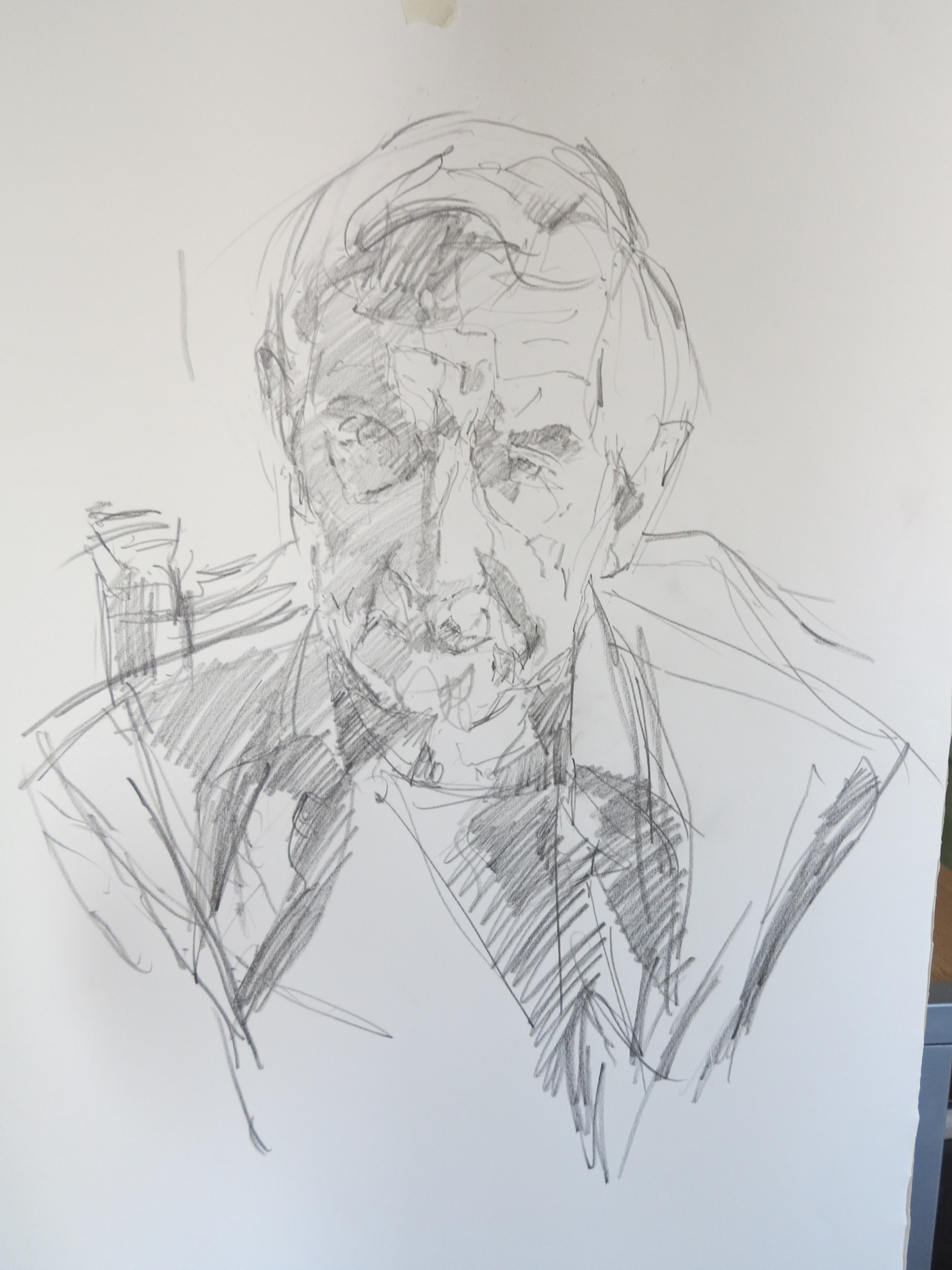
1VH22AUG“I’ve decided to draw today. I can get a lot of information for the paintings from drawing,” he said. “Before photography, that’s what painters had to rely on. A lot of their subjects didn’t have the time to sit while they completed a picture,” I said, “Let me show you a drawing by van Eyck that he did for a portrait of a Cardinal Albergati.” I went downstairs to my office and returned with a book. “Take a look at this. It’s a silverpoint and here is the painting that resulted,” I said. “Bloody amazing, but that’s not the kind of drawing I do,” he said. “Eyck is sort of in a class by himself. Proves my point that progress in art is bunk,” I replied. Stephen started a pencil drawing in a sketchbook. “I’ll do a couple smaller drawings first and move to something larger in a bit,” he said.

“Back to the subject of art fairs. It’s a whole new way of marketing art and it’s leaving a lot’s of people out,” I said.

“Like me. You know there’s is no middle. It’s all high end or crap,” he said.

“The middle class is down the tubes and with it a whole art market. I read where high-end auction houses are starting their own art galleries in New York and London,” I said.

“No shit! That should leave the high end galleries quaking in their boots.”

“Ya, a lot of big galleries are following the small galleries and going out of business. It’s all about big, and I do mean big, money. The bubble’s got to burst,” I said.

“It can’t be too soon. Perhaps the hyper-rich should go back to collecting tulip bulbs,” he said.

“No kidding, I just saw an auction estimate for a Jeff Koons’s balloon dog sculpture from Christie’s for 35 to 55 million bucks,” I said.

“What?”

“Well at least it’s orange and ten foot long,” I added.

“Somehow I doubt that people four hundred years hence will be looking at the Koons with the same reverence that we have today for Michelangelo’s David,” he said.

“Only if we have a new religion that worships dachshunds,” I said.

Stephen had started a larger drawing mounted on a board. “In the end, I’ll likely transfer a drawing to a larger painting by either tracing or bouncing,” he said. “That’s a rather old fashioned way to go isn’t it?” I said. “Sure, but I’ve got more control that way. Drawing is a prelude to painting,” he said.

We talked a lot about drawing over the summer. Drawing is somehow the key to everything; it is a way of visually talking. Sometimes during our conversations we would doodle or make small sketches to emphasize a point and that’s just a way that artists talk to one another. I would crudely draw something for Stephen, sometimes upside down for me and right side up for him, if he was sitting across the table from me, and exclaim, see! and usually he did.

“Drawing is a love affair to the painting,” he said.

“Affairs are sometimes very messy,” I said.

“Where is life without love?”

“Pretty much nowhere,” I said.

“Making art is very close to sex and that’s the great thing about being a painter. There are very few jobs that have that direct sensual experience,” he said.

2VH22AUG“It’s pretty impossible to explain to someone who has not had the experience themselves, how it feels to paint, to make art of any kind, to have the words come, to realise the music in your head. It’s the opening of the door to the cosmos.” I said.

“It was Graham Sutherland who really got me interested in drawing. I remember seeing his stuff at the Beaverbrook when I was a kid,” Stephen said. “Yes, they have some great drawings of his, particularly the Churchill studies. The hand drawings are really nice,” I said. We continued to talk about the importance of drawing and that somehow the craft has been largely lost. “It’s about the hand,” I said, “ There are a lot of good forgeries of paintings from all ages around, but not so much of drawings. It’s just so damn hard to capture the artist’s hand.” “I noted that too. Perhaps it’s just not as profitable as forging painting. The big money is in painting and a passable forgery of a painting is easier to do than an old master drawing,” he said. “It can be done if you have the right old paper, the right drawing materials and fake an anonymous artist, but it seems like a lot work for little return,” I said.

“I am not really interested in sculpture, but I like Henry Moore’s drawings. He did some really nice ones during World War II,” he said.

“I can deal with sculpture. I like Moore’s classical pieces, but sculpture does tend to get in your way when you are trying to look at paintings,” I said

“It’s because sculpture deals with actual space while painting’s space is an illusion,” he said.

“Some, including Plato, would say that was a bad thing,” I said.

“But they would be wrong. Illusion is a wonderful thing,” he countered.

“I’m more often delusional and I’m not sure how wonderful that is, but I can put that off to old age and creeping senility,” I said. “Well, I can certainly agree with the senility part. The good thing about senility is that there are lots of things that are best forgotten,” he said.

3VH22AUGThe afternoon, along with the light, was drawing to a close. Stephen was trying to finish as much as he could before it became too dark to draw. “Drawing is the rehearsal and painting is the performance,” he said. “Ah, the play’s the thing wherein we’ll catch the conscience of the viewer,” I said, loosely misquoting Hamlet. “You know, I am not getting any younger and there is a lot more art I want to do before I pack it in,” he said. “I wouldn’t worry about that, you have got a lot of juice left in you,” I said. “There is never enough time to do what you have to do,” he said. “Look at this way, when you’re dead, you’re past worrying. Your art is going to be around a lot longer than either of us,” I said. “I want to paint tomorrow. Are you up to it?” “Certainly,” I said.

© Virgil Hammock, Sackville NB Canada, Tuesday, November 5, 2013.

h1

Stephen Paints a Picture: Part Eleven

October 30, 2013

19 August 2012

stephen scott 19Aug“Did you check out Stuckism on the web last night?” I asked Stephen Scott as soon as he stepped into the house.

“Sure did. Strange stuff, but when you boil it down, I guess we are both Stuckists,” he said.

I had told him to take a look at the movement the night before because I thought he would find it interesting after all our talk about the Young British Artists movement. The term Stuckism comes from a remark made by Tracey Emin, a member of the Young British Artists, to her then boyfriend, Billy Childish, about the art that he was doing, in her words, was so “stuck, stuck, stuck” in the past. The relationship failed, but the term lived on as Stuckism complete with a manifesto and followers all over the world as an anti-anti-art movement. The artists in the movement wanted a return to figurative art and away from the conceptual art that seemed to be in control of British art at the time (1998/99). They went so far as to picket the Turner Prize every time it was awarded.

“I thought that you would find it funny. Too bad that most of the Stuckists painters I could find suck, but their hearts are in the right place,” I said.
“Yes, and interestingly enough, I couldn’t find any Canadian artists on the list of members,” he said.

“Perhaps, it’s time for us to form a Canadian chapter,” I said.

“Well let’s get started,” Stephen said, trying to get everything in place for painting while trying to avoid my dogs who always want to be in the centre of things. “I think you know my thoughts on chaos and art.” I said as I assumed my pose for his painting, “ Did I ever talk to you about Morse Peckham’s book, Man’s Rage for Chaos? I think you would find it an interesting read.” “No, I don’t think that you did.” Stephen pointed his brush at me and used it to direct my head at the angle he wanted.

“Well, Peckham maintains, and I agree, that art, or at least progress in art, is not about order, but the reverse and that art moves ahead through disorder and chaos.”

“That very well might be true, but there is a case to be made for order within a work of art.”

“I was thinking more of changes in the direction of the history of art like where in hell did Cubism or Dada come from.”

“Surely, actual history rather than art history had something to do with it. World War I and psychoanalysis really fucked things up,” he said.
“Of course, they did, but I think you can see chaos in art throughout history. It’s not that I don’t like order, only that I have a hard time with progress.”

VH 19Aug“I think that there is a lot of chaos in this damn picture,” he said, “it’s fighting me all the way.” I asked him what he meant by fight. “At the moment the colour is rather dull. It should sing.” “Like the fat lady?” I said. “Sometimes working with a limited palette is a bit of a challenge, but I like the natural colours I use,” he said. “The singing bit is all about local colour (the contrast between one colour with another) isn’t it? I asked. “Sure, that’s why the background in a portrait is important. A dark background will make the colours in the face pop out.” He was working on the left side of face which was the darker side as I was lit from the right. “The paint is what it is all about. You are just an excuse to paint,” he said. “I hope you don’t say that to all your sitters especially those who are paying you,” I said, but I knew where he was coming from. The act of painting is rather like being a child in a sandbox; it’s all very tactile.

“How do you know when to move from a study to a finished work or even when a study is finished?” I said. “It just looks right. Some elements have come together and you know it’s time to move on.” I made us both a cup of coffee and took at a look at what he was doing. “Are you going to go back to the first painting and try to finish it,” I said. “Likely, but I might move to another oil sketch instead. There is never enough time for anything.” “What is it that you are looking for in this painting that wasn’t in the last one?” I asked Stephen. “Don’t really know, perhaps it has something to do with composition or focus,” he said. “Every mark means something and every mark in every picture is different,” I said. “You can’t really think about it. I just have to force myself to work every day. If I thought about it too much, I would end up stopping,” he said.

Stephen’s advice was wise, as I do tend to think too much which inevitably gets me in trouble. “I guess you’re right, if I stuck more to my brush and less about getting everything right, I would still be painting,” I said. “No, I still want to get things right, but if you just keep doing it somethings are bound to come out right,” he said.

“I sometimes feel that I’m walking on the edge of a razor blade with death on one side and life on the other towards an inevitable oblivion,” I said.

“Now that’s morbid.”

“No, I’m just pissed off that I have wasted away my life and you, on the other hand, at least have a body of work.”

“What do you mean? Your taught all your life. Tons of students and then there is all your writing,” he said

virgil 19Aug“I’m not sure to what end and, in the last fifteen years of my life, I’ve been a small-town politician. It’s only now that I am trying to re-invent myself and I don’t have another fifteen years. Shit, I’ll be ninety. Most people at ninety are dead.”

“You should really stop feeling sorry for yourself, get off your ass and just write,” he said.

We were now back painting.

“You know,” he said, “painting is a healthy way to express unhealthy feelings.”

“Yes, Lucian Freud certainly had that down to a science,” I said. “You can say almost anything in painting and get away with it,” he said.
We were back on a favourite subject. What art allows us to say that cannot be done by other means; the so-called artistic licence.

“Art is a therapeutic tool tool, an emotional experience and the tool is in the making,” he said.

“I thought you said that this was fun?” I said.

“It is, but it’s lots of things, all at the same time.”

“Isn’t the process more important than the product for you?” I said.

“Certainly, definitely.”

“Well most viewers could care less about process. They are generally looking for a pretty picture or some kind of experience that comes from contact with a finished art work,” I said.

“There is the big difference between the maker and the viewer,” he said.

“Mind you, the viewer can make up their mind about a painting in a second while the artist can take weeks to finish the same painting. Hardly fair is it?” I said.

“The term ‘finished’ is a problem and perhaps we should bring today’s session to a finish. I could use a drink,” he said, getting in the last word.

© Virgil Hammock, Sackville NB Canada, Monday, October 28, 2013.

h1

Stephen Paints a Picture: Part Ten

October 23, 2013

17 August 2013

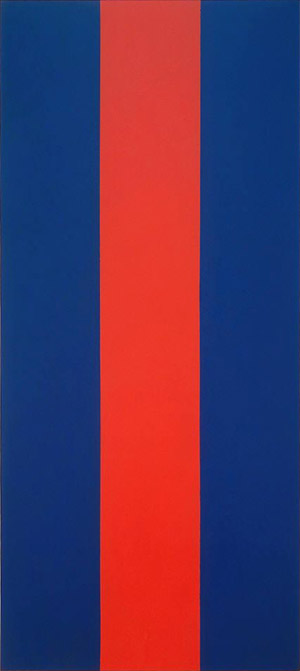
Stephen Scott came to my house after the Sackville Farmers Market, an event which happens every Saturday morning, where we had already had coffee and had talked for a hour or so about art and what we were doing. “Remember, I said that I did like (Mark) Rothko,” were the first words out of his mouth as he sat down at my kitchen table. “Yes, of course, and I do as well. He made beautiful objects,” I said. “He does, and his paintings show signs of a lot of physical work which I like,” he said. “I think that are many non-realist artists that we could both agree made great paintings,” I said. “One modernist painter whose work I think is a load of horse shit is Barnett Newman,” Stephen said. “Are you talking about Voice of Fire. The painting at the National Gallery?” I said. “Yes.” “I don’t know about that, I think some of them, Voice included, are rather beautiful to look at,” I said. “We can agree to disagree,” he said.Voice_of_Fire_photo

“Let’s get down to business. It’s mid-August and I only have a place to stay in Sackville until the end of month. I am not sure that I can finish by then,” he said. We were looking to have a large portrait at the end of the project and the oil sketches and drawings were the lead up to it. “We will just have to increase our settings,” I said. Now that we had two oil sketches going, we could alternate them, giving one a chance to dry a bit while he worked on the other. We moved the kitchen table out of the way, arranged the chairs and his painting gear and sat down to work. “I could work on a single subject for a year,” He said. “If you did, it should be something more interesting than me.” But, the thought of sticking to something, anything, has its rewards in painting as it allows for the development of a complex idea. So, I asked him about change for change sake. “The idea of radical change is a bit of illusion, isn’t it?” he said. “Like Rothko?” I said. “Yes, Rothko stuck to things.”

“Did I ever tell you about the time I met Rothko?” I said. “I did talk to you about my teacher, John Hultberg, and his trouble finishing paintings. Well, he had moved back to New York from San Francisco and I happened to visit New York and John must have been 66, and he took me to the Cedar Bar for a drink and who should drop by, but Rothko. It turns out that John and Mark were old friends. Boy, I thought, here I am with two famous artists in a famous bar and I am part of the conversation. I wish that it had turned out better as both of them drank like fish and I matched them drink for drink only they were a lot better drinkers than me. Don’t remember a thing, only that Mark was wearing a long overcoat and a black hat. Once again, history had passed me by.”

“It is interesting.” he said, “We certainly miss opportunities, don’t we.” “I am afraid that when the train of history comes into the station, that I won’t be on the platform,” I said. “I am not sure that I will ever be part art history. I am not in the right place nor the right time,” he said. While he continued to paint, we talked about art history and why some art, regardless of quality, becomes famous while other stuff never get recognition or slips from favour. “It is that old chestnut that the victors write the history and the victor, at least today, is big, big money,” I said. “Of course, you are right and there is not a chance in hell of that changing, but my problem is that I could never play the game that is today’s big art. The kind of stuff that is in Venice or wins the Turner Prize,” Stephen said. “Don’t be too put out. You can still put food on the table with your painting and you can look at yourself in the mirror,” I said.

“What’s that we are listening to?”, he asked. “Sounds like Handel to me, let me have a look.” I said peering at readout on my streaming radio, “Yes, Rinaldo, one of his operas.” “I like it. Something nice about music like that,” he said. “You know, we are really trapped in the past,” I said. “There is other music I like. How about Frank Zappa?” he said. “Good thought, Zappa, besides being crazy, wrote some quite credible classical music that is being played today by major orchestras.” Stephen had a pencil in his hand. He was using it like a stylus to make lines in the thick wet paint on the canvas. “Interesting technique. I like the way that you use anything at hand,” I said. “Anything that works is OK with me,” he said. “I used to use my hands a lot, my palm, my fingers to blend the paint. Not a good idea considering what’s in oil paint,” I said. “You are right about that, but I get enough paint on myself without finger painting.” “The messy part is the fun part of oil painting,” I said. “One can’t get enough wet into wet,” Stephen added.

brushes etc“I think that painting is taking over,” he said while still looking intently at me. “Does that mean that I can sit back and relax?” I asked. “No, but we could stop and have a coffee and look things over,” he said. There is point in most paintings where the real action is in the painting rather than the subject. Where one stroke of the brush calls for another and you attempt to bring it all together. I think that you have to be an artist to understand what Stephen means by ‘taking over’. A finished painting is a finished painting and how the artist got to that point is mostly invisible to the viewer. “Sometimes painting is just work,” he said. “All work and no play makes Stephen a dull boy,” I said, “We had better find something exciting for you to do.” “Painting is exciting enough for me, only that it is hard to get it right,” he said.

Still over coffee, I said, “Stephen, does Postmodern art have values that trump beauty?” “Don’t know about trump, but beauty is notably lacking in a lot postmodern stuff,” he said. “You are still producing wall art which is passé in many peoples eyes,” I said. “Well, people can have a choice between looking at a wall or looking at art on a wall.” “Sometimes when I go into an artists run gallery or civic gallery and I am faced with the usual, a pile of rope on the floor, crap leaning the walls or just an empty space, all usually accompanied by long statements by the artists or curators, I am at a loss for words, so I just make nice,” I said. “It rather reminds me of going to church,” he said. “Seriously, Stephen, we are missing something. All those people in black can’t be wrong all the time,” I said. “It’s a game mostly for the young, but it goes back a long time, to Duchamp and before. Old farts, like us, are just reactionaries,” Stephen said. “I was at a major opening recently where all of the remarks were about how young all the artists and all the curators who picked them were and how fresh and original the works in the exhibition were although it looked like the same old shit to me that I have been seeing in exhibitions over the last fifty years. I thought I should just lie down and die on the spot,” I said.

“Well, before you drop dead, let’s get a hour’s painting in,” Stephen said.VH 17 Aug

© Virgil Hammock, Sackville NB Canada, Sunday, 20 October, 2013.