h1

Stephen Paints a Picture: Part Twenty Seven

August 11, 2014

21 May 2014

When I left Stephen Scott’s Nashwaak Village home on May 11th to return to Sackville, I intended to return once more to get some additional work done on my portrait before we were scheduled to finish it at the Beaverbrook Art Gallery later in the month. We both felt that we could use the extra time, but that morning, Stephen woke up with his jaw very swollen and in pain. He, Sophie, his wife and I were all very concerned and it was decided that he should go to the ER at the hospital and find out what was going on. It did turn out that he had a bad infection, and not, thank God, a return of the cancer, but it required him to have daily IV treatments and many trips to the hospital over the next two weeks. There were times during that period when we thought that we might not be able to finish the portrait at the gallery as planned. The idea was to work in the gallery from Tuesday May 20th. until Sunday May25th., which was Lord Beaverbrook Day at the gallery, an open house that attracts hundreds of people to the gallery. We thought that it would be a great day to finish the painting.

As it turned out, May 20th. was Stephen’s last day of treatment and he was very determined to finish the picture come hell or high water. So, I arrived on the afternoon of the 20th. and we planned to start work the next day, Wednesday the 21st., a day late.

The original idea was to work every day from one to five pm with the exception of Beaverbrook Day, when we would work from eleven until two. We figured that we could work extra hours, if need be, to make up for the day that we missed. The first problem was making sure that we had everything we needed to work in the gallery as it was a fifteen kilometre drive from the gallery to his studio to get anything we forgot. So, around noon we were at the gallery with boxes of supplies, lights, extension cords and anything else we could think of. “At least, I now know what the background will look like,” Stephen told me. He had struggled with the background while we were working in his home studio. The next step was to get the lighting in the gallery to match the lighting that we had been using in his studio and to find a chair that would work for me to sit on that was similar to the one at his house. We also placed tape on the floor to mark the location of the chair and lights. It took us a full hour to set everything up, but we were ready to start at the advertised one pm start.

painting at beaverbrook

“The gallery lighting is a bit difficult,” he said.

“But, at least it’s constant,” I added, “and won’t change throughout the day.”

“You know, I haven’t got enough white paint,” he held up a tube of nearly spent white paint, “Even Winsor & Newton sucks. You can’t buy good paint for any price.”

“Can you get some white paint down the street at that art supply place?” I asked.

“Yeah, I’ll get Sophie to go and see what she can dig up, but last time I tried, I was with you, I had a hard time getting lead white. I’ll have to settle for whatever they have.” He sent her on the mission and added, “See if you can get a couple cups of good coffee.”

Stephen had a difficult time getting me in the right pose, but after a considerable time of getting me to move my head this way and that, he started. At first there were only a few people in the gallery watching us work, but after about a half a hour, Adda Mihailescu, the gallery’s education officer, showed up with a large group of young children who ranged in age from around five to ten. They were the very audience we were looking for. They asked the questions that older people would like to ask, but are afraid to.

One young boy looked at me and at Stephen and asked him, “Is that your brother?” Another asked him. “Are you a painter?”

“Yes,” Stephen replied, and asked the children, “What do you kids like to paint?” Several of girls said ponies and boys liked, of course, super heroes. One of the girls said, “Can you paint butterflies?” It was apparent that they would rather have seen Stephen paint ponies and butterflies than me, but their attention was rapt, nevertheless. One of the older girls, about eight or nine, told us that her favourite class was art and added, “When I grow up, I want to be an artist.” They stayed for all of about ten to fifteen minutes, but it was the reaction that we wanted and it made seem like what we were doing in the gallery was the right thing. After they left, Stephen said, “If kids got into art from the start the world would be a better place.”

“Yeah, by the time kids get older than this group all their creativity has been crushed out of them. They are convinced that they can’t draw. It’s a fucking shame,” I said.

By this time, Sophie had returned with the paint, the coffee, and couple of candy bars to boot. She managed to find a large tube of titanium white. “This will have to do,” Stephen said. We took a break to see how things were going while we drank our coffee. “It’s interesting,” he said, “we’re painting the picture in the space and light where it will be exhibited in.” Adda showed up with another chair with arms for me to sit in. Both Stephen and I thought it was a better choice. It was certainly more comfortable and I was going to be sitting in it for a long time.

“What do you feel about working under such a tight deadline,” I asked.

“It does put me under a lot of pressure, but it’s probably a good thing,” he answered.

“You seem to be throwing a lot of paint around today. I would never know that you were sick as dog for the last couple of weeks.”

“It does feel good to be painting again.”

When we were back at work again, people came in and out of the gallery and watched what we were doing, but most of them remained silent and kept their distance. They were interested, but didn’t know quite what to do. They treated it like theatre. We tried our best to engage them in conversation. “So, what do you think?”, I asked a young woman who was looking intently at Stephen working on the painting. ‘It does look like you,” she replied.

“That’s more or less the point,” Stephen said, “Do you paint?”

“Not really, I had a couple classes in college, but I never followed it up, but I do like art.”

“You should really give it a shot again,” he told her, “It’s never too late.”

“Maybe I should, but I don’t think I would ever be any good.”

“I think that you should follow Stephen’s advice,” I added.

She left smiling and we felt that we were accomplishing something. “It’s good to have you working on this painting with the rest of your work on the walls. It takes some of the mystery out of art. I don’t think most people understand that painting, in particular, realistic painting, is done by a human being. Mind you, a talented human being,” I told Stephen.

“Yeah, I think that they find it interesting to see me working from life rather than photographs.”

“It’s great having the drawings and oil sketches here as well. Hopefully people will see the progress from them to the painting and perhaps get some understaning of how you work and think,” I said.
“It’s about working it up from the sketches. I certainly learned a lot from drawing,” he said.

About that time, Stephen May, another Fredericton painter showed up. Both Stephens were students at Mount Allison around the same time and are, at least in my opinion, fine realist artists, but it’s hardly an objective opinion as I was the head of the fine arts programme when they were students.

“I’ve been look forward to this,” May told Scott, “I’ve been to the show a few times, but this is different.”

“Don’t make me nervous,” Scott said.

“I doubt I could do that. I like the show, but I guess I told you that at the opening.”

“It’s certainly a new thing for me painting in public. It’s sort of like being naked in public. No place to hide your mistakes,” Scott told him.

“You do use a very limited palette, don’t you?” May asked.
“I think that it works better. You can do a lot with little,” Scott replied.

They talked for a while as people came and went and listened to their conversation. “You know,” I said, “It’s getting close to closing time. We’d better get out of the gallery before they throw us out.” Sophie had returned and was taking photographs of the process. Just as May departed, yet another Fredericton artist and Mount Allison graduate showed up, Stephanie Weirathmuller, a younger colleague, but also a realist painter who I had invited to dinner with Stephen Scott, Sophie and I.

“Just give me a chance to clean up and we’ll be on our way. I could use a drink and something to eat,” Scott said.

© Virgil Hammock, Sackville NB, Canada, Sunday, August 10, 2014.

h1

Stephen Paints a Picture: Part Twenty Six

July 16, 2014

10 May 2014

After we finished breakfast, Stephen Scott and I adjourned to his Nashwaak Village home studio to have a look at his uncompleted portrait of me before he started work on it again. “The skin tones are too yellow, it’s the artificial light,” he tells me, “You know there’s a lot to be said for black and white.”

“Doesn’t look too bad to me, but I know what you’re talking about. More than once when I painted with tungsten artificial light the painting looked different in natural light. As you said, too yellow. It’s the colour temperature. I changed to daylight bulbs.”

“And then there is yellow shirt,” he added.

“Looks jaundiced, does it?”

“Speaking of yellow. I do like that yellow nude painting of Goodridge Roberts.” Stephen said.

“It’s like all of those German yellow nudes,” I replied.

“I wish I could do it,” he said.

“It’s back to the expressionist discussion of yesterday. I keep telling you’re a realist and not an expressionist.”

“What’s the term we came up?” he asked, “ neo-post-romantic?”

“That’s it.”

“Well, let’s see if I can fix the painting, sit down and we’ll get started.”

I sat and he took his paints out of the water bath where he had left them the day before and began to transfer them to his palette. He turned on the light, I took out my pen and we started. He was trying something with a small brush which is something he doesn’t do that often.

wet paints“I need a maul stick. I’ve got one somewhere,” he said looking around studio. He did find one, actually two.

“That really makes you look like an artist. I have seen all of those self portraits of 16th and 17th century artists holding their maul sticks and palettes.”

“Don’t forget the long brushes,” he added, “and on the subject of brushes, I don’t seem to have the right size.”

“You have a ton of brushes, Stephen, but you seem to use medium to large bristle flats most of the time.”

“I like flats they’re the most flexible.”

“I used to like rounds,” I said, “flats are a much later invention. All of the Renaissance artists used rounds.”

“In the end the public really doesn’t give a shit if an artist uses a flat, a round, a bright or filbert, it’s the painting that counts,” he said.

“And I guess that goes for mediums as well. Do they care about linseed oil, walnut oil or poppy seed oil? I doubt it,” I added, “It’s all about the product, the painting and not the process, but it is the process that I find interesting.”

“That’s because you started out as an artist and not as a critic,” he said.

“Yeah, but to be a good critic I think you really need to know about how something is made, process as well as history.”

brushesWe had spent months talking about art history, both current and past, and the process of painting while Stephen painted my portrait and we both came to the conclusion that you could not separate the two. Perhaps the conversation went the way it did because of our shared backgrounds in being trained as artists, but, more likely because we were interested in the mystery of art, in particular painting, and what drew people to art. The whole idea of painting is queer. You have an object hanging on a wall that people look at and, that if the object interests them, they might be emotionally moved. It seems to have worked for a very long time and I doubt that it will cease to work in the future.

Stephen had stopped working with the small brush and reverted to a much larger one. “William Merritt Chase’s and John Singer Sargent’s approach to art was right. You’ve got to get right from the start,” he said.

“That’s an interesting pair. I know Chase really admired Sargent and they both could do kick ass portraits. Frankly, you’re the first artist I’ve known who’s ever mentioned Chase. There’s lots of really good artists artists who really get lost in art history.”

“Speaking on lost. Let me show you something.” He stopped painting went upstairs and returned with a small paperback book, “Have a look at this.” It was a copy of the 1936 catalogue of the 149th official exhibition of the Société des Artistes Français at Grande Palais des Champs-Elysées that he had picked up in Amsterdam years ago. “See if you can find anybody you know?” he asked.

It was a good question. There were hundreds’ if not thousands, of artists listed and illustrated and I, like Stephen, couldn’t find a single artist that we recognized. I wish I was exaggerating, but every artist in this very large exhibition seems to have slipped into obscurity and I pride myself on knowing about obscure artists. Supply, it seems, far outstrips demand as far as art goes and that certainly includes ‘officially’ sanctioned art.

“Scary isn’t it?” I said referring to the catalogue, “Hopefully you’re dead before you’re forgotten. Being dead sort takes ego out of it.”

“Better you should take the money and run. It’s better than being famous after you’re dead,” he said.

“The trouble is that most artists aren’t famous or rich when they are alive or when they are dead,” I cheerfully added.

“It does make one wonder why one does this stuff,” he said looking at the brush in his hand.

“Well most good artists, and you’re a good artist, can’t do anything else. It’s more a curse than a blessing. How’s the painting coming?”

“OK, I think. Why don’t you have a look? I’ll make us a coffee. This whole process is odd. I’m not sure about asking professionals about my work, especially while I’m doing it. I remember asking Bruno Bobak to my studio and asking him what he thought. You know what he said? ‘Some have it and others don’t’. Sort of made me want to stop.”

“It’s too late for us. We’ve been at this since last July. Look, you’ve made something out of nothing although I don’t like the idea of calling myself nothing.”

We went into the kitchen and made coffee. “Jesus, this a slow process,” he said. “Are you talking about the coffee or the painting?” I said.

“Don’t be an ass. Just go back and look at the painting and I’ll bring you a cup of coffee.”

I actually couldn’t see a lot of change from where we had left off the day before, but it seemed better. Small changes count for a lot. It was not only what he had added, but what he had taken out. The biggest critic of Stephen’s work is Stephen.

“I like it,” I told him, as he was coming back into the studio with my coffee, “Where have you been doing most of the work? The head?”

“Yes, but it’s still a long way from right. I’m afraid of fucking it up.”

“No chance of that. It’s going to be pretty painting. I’m going to sit down, drink my coffee and let you continue.”

“Berlin must have been a hell of place to work before and after World War I and before the Nazi screwed it up for everyone,” he said.

“Yeah, there was a hell of a lot of energy going on. Great goings on. Mind you, Paris was the other side of the coin.”

“I would’ve given anything to be in either place at the time,” he said.

“But here we are in New Brunswick,” I replied, “definitely not Berlin or Paris.”

“I can see that every time I look out the window,” he added.

“There is the school of thought that you can make great art wherever you are.”

“That might be true, Virg, but there’s something to be said for the energy of a place.”

“You have point. Both you and Colville have worked in Berlin and loved it. At least that’s what both of you have told me.”

“I’m not sure why we’ve never had that energy in Canada much less the maritimes.” he asked.

“We’ve never been through the shit that Europe has been through and in the maritimes we just don’t have the population. The kind of people that settled here, like the Loyalist, didn’t give two hoots about the arts. In general they were dull people. Hell, in France they were having a revolution every other year form the end of the 18th century and all through the 19th.”

“Still, people made art here and continue to do so,” he said.

“That’s more to do with people than place. People like you make art because you have to and that says a lot about the human condition. I think that art is within us and artists are different because they let it out.”

“That’s great, but it’s a hell of a way to make a living, at least here.”

“Do you want to stop? I’ve got to go back to Sackville tomorrow morning, but I’ll try to get up here once more before we start working in the Beaverbrook at the end of the month. What do you say?”

“Sure, let’s get Sophie (his wife) and go downtown for dinner.”

© Virgil Hammock, Sackville NB, Canada, Sunday, July 13, 2014.

h1

Stephen Paints a Picture: Part Twenty Five

July 8, 2014

9 May 2014

the studio

It was shortly after noon when I sat down and Stephen Scott started to continue to paint his portrait of me at his Nashwaak Village home studio. We had been talking, over breakfast, about his summer plans. Every year he tries to get away from the Fredericton area that is “too fucking hot”, to quote him, and work elsewhere. Last summer he was in Sackville and that resulted in this project. “I have an offer to go to Minister’s Island which would be interesting,” he said.

“Where’s that,” I asked.

“Around St. Andrews. You can only get on and off the island at low tide.”

“You sure? What’s happens when you need a beer? Much less if you need to get to the hospital? There is a health thing, you know.”

“Islands are romantic.”

“So is a dead artist. You could come back to Sackville. It’s pretty nice in the summer as you know.”

“Actually the idea has crossed my mind more than once.”

He was working on the canvas with what looked like a two inch brush. “What are you doing?” I asked. “Covering up yesterday’s mistakes,” he replied.

“Jesus, you spend hours doing details then turn around and cover them. You’ll never finish at this rate.”

“I hate the fussy stuff. Sargent did the same things. He would spend thirty or more sittings on a portrait and then wipe it out and start all over again.”

“And then there’s Freud,” I added, bring up another favourite artist of Stephen’s.

“All my favourite artists are slow—wonder why?”

“Seems pretty obvious to me. You like artists who paint like you. It’s all about paint, isn’t?”

“You got me there. By the way, what do you think of Freud’s portrait of the Queen?”

“I don’t know if we talked about that before, but to me, he made her look like a British housewife from the 50s. He certainly didn’t idealize her.”

“It’s still a good painting.”

“I’m pretty sure that it’s not one of Queen’s favourites, but she had the balls to commission it.”

“I still admire Walter Sickert.”

“Of Jack the Ripper fame?”

“That’s bull shit, but he, like, Freud and Sargent were artists who can control their media,” Stephen said.

“But not without a fight,” I countered.

“Yes, the fight is the good thing and that’s what I’m doing with this painting of you.”

“Now it’s about who’s going to win: the painting or you.”

Stephen and I had talked a lot over the past year, during this project, about painting being a form of combat. Generally a combat that remains invisible to the viewer, but is all too obvious to the artist during the production of an art work. There are exceptions, like in the work of some abstract expressionist painters such as Jackson Pollock, Philip Guston or William de Kooning where the combat is very visible. The American critic Harold Rosenberg talked of abstract expressionism as action painting. But there is a lot of action in the paintings of Rembrandt, Hals, Sargent, Freud and, indeed, Stephen, only the action, the combat, is covered, brought to a cohesive whole, rather then being left visible on the surface as in a de Kooning or Guston.

“There’s a very delicate balance between skill and control,” Stephen said.

“By skill, I assume you mean technique?”

“Yes. There are certainly artists who have all sorts of skill or technique and still are not good artists.”

“I’m not sure about the reverse,” I replied, “I guess it’s possible to make good art without skill, but not very likely.”

“I would think that it would be more of an accident than anything else,” he said.

“Along the lines of a donkey painting a likeable abstract painting with his tail; the monkeys with typewriters thing.”

“Yeah, I’ve yet to see much high realism painted by donkeys, but anything is possible.”

“And I’m still waiting for the thousand monkeys to produce a really good book, but we’re left with the problem that art, whatever art is, is separate from technique, skill and, for that matter, control,” I said.

“If we can figure out what art, is our fortune will be made and I can stop painting right now. Speaking of stopping. Let’s have a cup of of coffee and you can tell me what you think.”

We went into the kitchen and while Stephen made the coffee, while I paid some attention to Echo, his dog.

“Stephen, I sure hope that we can pull this off and actually finish the painting in the gallery (The Beaverbrook) on schedule,” I said.

“I don’t think that we have much choice, do you?” he replied, “anyway, have a look before we start again.” He handed me a cup of coffee and we went back in the studio.

“Looks pretty good to me,” I said, “but we’re going to have to really figure out the hands. I think they’re sort of key to the painting. They define who I am, a writer.”

“Yeah, in an old fashioned way, since writers today write on computers and not longhand with a pen and paper.”

“True, I’m going to write this shit up on my Mac and publish on my blog, but all of notes are on this notebook. But the point of this whole exercise is a bit of an anachronism. A throw back to a 17th century oil portrait painting of a guy who is a writer. Hell, it’s a classical motif.”

“OK, sit down and we’ll throw ourselves back into the 17th. century.”

Stephen started his creative dance in front of the canvas. A dab here and a dab there. It’s kind of wonderful to watch him work on a large painting. There is a real energy in his movements which is a great thing, considering what he has been through with his illness, the cancer of the jaw, that in general as left him fatigued.

“You’re talking about motifs,” he said, “some change, others don’t. Look at guitar painting: Goya, Manet, Picasso. All made great pictures with the guitar as the central element.”

“Let’s not leave out the nude and women, in general, as an important motif.” I countered.

“You know who I still have a problem with is Balthus,” he relied.

“He is sort of a dirty Fred Ross or, perhaps, historically, Fred Ross is a cleaner version of Balthus.” I said.

“I like naked women as much as the next guy, but I just can’t get my head around the prepubescent little girls.” Stephen said.

“Yeah, the painting of him in the bathrobe is a bit much.”

“It’s hard to get around the nude, but difficult to do these days in our age of political correctness,” he added, “but we still have romantic landscape.”

“Romantic?”

“I’m too jaded to be a romantic,” he said.

“Bull shit, you’re full blown romantic. How about if I call you a post-romantic? No, make that neo-post-romantic as there was a post-romantic school in the 19th. century.

Not a bad name for a new school, Neo Post Romantism.”

“I like it. Let me write it down.”

“Well, Stephen, do you need cancer to go from a romantic to a neo-post-romantic?”

“Yes.”

“In that case, we are both neo-post-romantics. I want to make it clear that we are not rejecting romanticism, but we’re romantics is an age that rejects romanticism which is different from the postmodernists who want to reject all the tenets of modernism. You agree?”

“I think so, but I’ve got to think about it.”

“OK, go right ahead, but on second thought, maybe we should widen our base from only those who have survived cancer to artists who share our antiquated ideas. The good thing about the cancer bit is perhaps we could have our own colour like pink and breast cancer. Then we could all wear green hats or something.”

“Green? It’s not my favourite colour.”

“Most of the good colours have all been taken. Just a thought. I like the hat idea.”

“Where are we going with this conversation anyway?” he asked.

“Look surviving cancer is a big deal and it does give you a whole new focus on life. You always know that it might come back and kick you in the ass and that’s actually true in my case with prostate cancer. I decided after my bout with cancer and a heart attack that I might as well do and say what I want. The hell with convention. You only live once and in our case, perhaps, twice. You agree?”

“Of course, but it can be depressing.”

“Look, I’m further away from my cancer than you, but I was around your age when I was diagnosed and I’m still here and that was twelve years ago. I’m still pissed off, but it’s more about not doing what I should have done with my life. So paint like there’s no tomorrow.”

“I’ve been thinking about that realist tag. I think of myself more as an expressionist than a realist. Intention is the root of all things.”

“Intention is one thing,” I said, “and the result is another thing. To my mind, you’re a romantic and it’s my job to make up tags. Banging away with square pegs and round holes. In the end, it’s the painting that counts not the label.”

“Are you talking about labelling the artist or the art work?”

“Both. I guess an expressionist artist can paint a romantic painting and vice versa, but the art work stands alone despite an artist’s intention.”

“That’s a little hard to swallow. You saying that an artist doesn’t know what he’s doing?”

“Not really. It’s more about intention and labelling. If you call a painting expressionist and the rest of the world calls it romantic, it’s likely romantic, but the painting is the painting.”

“You’re losing me, I think it’s time to stop for the day and have a drink and, in your case, a stiff one,” he said.

© Virgil Hammock, Sackville NB, Canada, Saturday, July 5, 2014.

h1

Stephen Paints a Picture: Part Twenty Four

June 23, 2014

8 May 2014

It was around two in the afternoon before we got our asses in gear and began working again on the large portrait of me that Stephen Scott was painting in his home studio. “We really shouldn’t be having these leisurely breakfasts if we’re going to get this sucker finished before the show opens,” Stephen said.

stephen painting 24

“Got to remember that I’m getting old and takes me quite awhile to her up to speed, but we do have a couple more days before I have to get back to Sackville,” I replied.

“I’m thinking,” Stephen said, looking at the painting, “that the formal elements are always more important than the narrative ones.”

“I agree,” I said, “I can’t get to the content of a painting until I can get by the formal values of a work. If it’s a crummy painting technically and I just can’t interested in its content.”

“True, but there’s a lot of shit out there that’s content over form and we’re supposed to like it because it has an important message.”

“Look, if art could solve the world’s problems we wouldn’t be in the mess we’re in now. Art to me is all about catharsis. You’re the art therapist aren’t you?”

“Yeah, but I gave it up to return to painting,” he replied.

“And, I’m glad you did.”

“You know, I think that I’m going to do some drawing before I start painting. I’ve got to do something about your hands.” He got some butcher paper that he had and taped it to his drawing board.

“That paper reminds me of a show I saw in Vienna years ago of Klimt drawings of the nude done on butcher paper. They were drop dead beautiful,” I said.

“Yes, he could do great things with so few lines.”

“I really think that your drawing has really been important to this project.”

“I used to do a lot more drawing because my studio was outside, in my car, but it’s good to be doing some drawing again even if I’m working inside. I’m way out of my comfort zone, however, inventing as I go. Normally, I might take photographs of your hands and play with them when you weren’t here, but we agreed, no photography.”

“And I said no recording. Just notes. We’ve made it hard on ourselves rather like wearing hair shirts and, speaking of shirts, I apologize again for forgetting to bring the yellow shirt.”

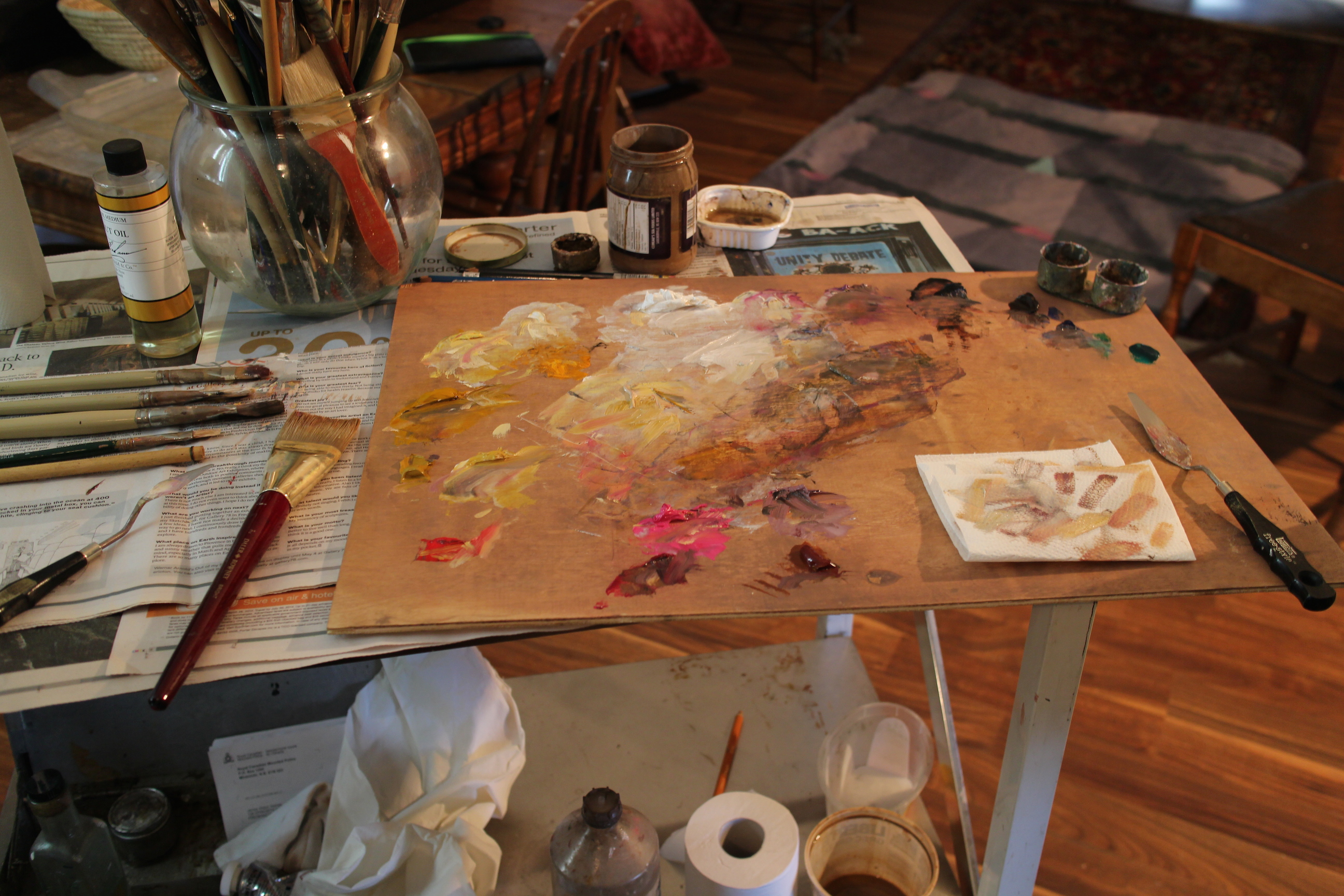
“We’ve got plenty to work on without the shirt.” he worked until about an hour on the hand study and then took a short coffee break before he started on the painting. He had put yesterday’s leftover paint on a sheet of glass which he stored under water in glass baking dish which he now transferred to a wooden palette.

hands

“Shall we start?” he said.

“Realism is always in vogue, no matter what. People just like it. It never goes out of fashion,” I said.

“If you try to follow style, the latest trends, you’re always one step behind. You should stick to what you believe in,” Stephen added.

“That’s a good thought, but art is fickle. Art is what people say it is and right now that can be pretty much anything. Duchamp really screwed things up and that was a hundred years ago.”

“Stop, you’re depressing me.”

“What establishes value is the market place and there’s fuck all we can do about it,” I continued.

“Surely there’s a breaking point. Somewhere, sometime there’s got to be a realization that a lot of what is passing for high art is crap.”

“I’m not sure, but one thing is for sure that so much is so poorly made that it’ll self destruct. Dust to dust.”

“A whole lot of Jeff Koons’s stuff will last forever.”

“You’re right. Now you’re depressing me.”

Stephen was looking intently at me as he painted and I attempted to sit still. The studies made at my place last summer were done while he sat. Now he was painting the large painting on a studio easel while he stood. He did a sort of dance while he painted, darting back and forth at the canvas. He looked to me like he was enjoying himself.

“Painting on your feet is a whole different process, isn’t it?” I asked.

“It’s certainly more physical,” he replied, “you can get away from the canvas and see the whole thing.”

“That’s why the long brushes are important. You can stand back and paint at the same time,” I said.

“Yeah, and you just can’t buy them. That’s why I made these extensions.”

“The only time I saw them was at Pearl Paint in New York and that was many years ago.”

“And you gave them away, you shit.”

“I’m sorry about that. You just weren’t in the right place at the right time.”

He was working on the right side of the head. “It’s more about what’s not there than what’s there,” he said.

“Good painting is certainly about making people think that they are seeing something that really isn’t there. The Dutch and British portrait painters of the 17th. and 18th. centuries had that down pat,” I said.

“That’s why I have to use big brushes. Stops me from being too finicky. I pick a brush, then put it down and pick a bigger brush.”

“Another thing you have in common with the Dutch artists like Rembrandt and Hals is a very limited palette.”

“There are contemporary Canadian artists who have masterful technique outside of the usual suspects like Colville, Forrestall and Pratt,” Stephen said.

“Like who?”

“Well, Robert Bateman, Ken Danby and David Blackwood.”

“I certainly wouldn’t put Bateman and Danby in the same ballpark as Blackwood.

Well, neither would I, but I was speaking of technique not if they were interesting artist or not.”
“Bateman, Danby, and to some extent, Pratt, I assume we’re talking talking about Chris and not Mary, are photo realists. I thought you didn’t like photo realists.”

“I don’t really, but they do have technique.”

“Sure, but it’s very different than Rembrandt and Halls. It’s like night and day. You paint nothing like a magic or photo realist.”

“Early in my career, I was much tighter. Like Tom or Alex.”

“I like what you’re doing now and I do like Forrestall and Colville.”

“The maritime realists, Alex, Chris and Tom are individualists and really don’t fit neatly into mainstream Canadian art history,” he added.

“How about Jack Chambers?” I asked.

“I do like him, but he’s an exception. I find a lot of Canadian art of the 60s and 70s crap. A low point.”

“You mean stuff like Bush and Molinari?”

“Exactly. I’m a romantic and they’re not.”

“I’ll give you Molinari, but I’m not sure about Bush. His last paintings, the colour field ones, are pretty. I like them. Anyway, let’s have a look at what you’re doing. We’ve pretty much butchered Canadian art history and I need a cup of coffee.”

The painting, to my eyes, was coming, although slowly, together, but Stephen was still be very critical. “Maybe, I should start over,” he said as we both looked at the painting. “For God’s sake, no. Look at the time we’ve both got invested in this thing.”

It hard to be objective when you’re looking at a painting of yourself, but I was feeling that he was finding faults were there were none. There was still a ways to go before the painting was finished, however, what he had done thus far was pretty damn good. “Look, man, why don’t we stop before you screw it up, have a drink, go into town for dinner and start fresh in the morning?”

“OK, as long as you’re buying.”

© Virgil Hammock, Sackville, NB Canada, Sunday, June 22, 2014.

h1

Stephen Paints a Picture: Part Twenty Three

June 11, 2014

7 May 2014

VH June 2014Two weeks later finds me in Nashwaak Village at Stephen Scott’s house and studio, once again to continue work on the portrait. We went to the Beaverbrook Art Gallery, around noon to pick up the unfinished painting from the exhibition and bring it back to the house. We managed, in the process, to create quite a stir. There was someone at the front desk who did not recognize me or Stephen and when I announced that we were going to take a painting from the gallery and replace it with a blank canvas all hell broke out. Thank God, Terry Graff, the gallery’s director, was not out to lunch and introduced me as an adjunct curator of the gallery, the curator of the exhibition and that finishing the large portrait was all part of the exhibition. It did, however, prove that the staff was on their toes.

Back at the house, around three in the afternoon, we had again to try and replicate the lighting of my kitchen in Sackville which is where we started the painting. We started talking about art forgeries and, in particular, the Chinese guy in New Jersey who painted fake abstract expressionist paintings that were being sold as originals in a high end New York gallery that in the end bankrupted the gallery. The poor painter, who got peanuts for his work, thought that he was painting replicas for people how couldn’t afford originals while others made millions from his work.

“Just another case of artists being screwed,” Stephen said.

“Hell, you can buy copies, good copies, from China of almost any painting be they old masters or modern art on the internet,” I added.

“It is just the way artists in China were trained, by copying. It’s not a bad away of learning, you know,” he replied.

“Still are as far as I know. When I was in China a few years ago, I had a chance to visit a few art schools and they still copy. Mind you, people are still copying old masters in museums like the the Met and they seem to know how to paint.”

“That does, once again bring up the question of emphasizing originality over technique in most art schools today,” Stephen said.

“That goes back a long time. Certainly that was the case when I went to art school and that was over fifty years ago. I thought I still got sort of a solid education at the San Francisco Art Institute, but there was still the idea that we’re artists rather than students.”

“You know,” Stephen, mused as he painted, “we might be able to use one of those Chinese guys just to do the work right now. It would be easier than figuring this painting out. It would give us more time to drink and bull shit.”

“I think it’s coming out pretty good, myself. Just that it’s taking a lot of time. I’m getting saddle sores.”

We did have an agreed upon deadline of May 25th to finish the painting. It would, we reasoned, be a nice touch to put the last touch on the painting at the gallery in the closing hours of the 25th. Lord Beaverbrook Day; a bit of added drama. But, it did mean that we would have to get our shit together. No mean feat as Stephen was not only a slow worker, but he is very demanding of himself and I lived in the terror of him deciding to wipe everything out and starting over again.

“Art is a mugs game, art is just a game,” he said.

“But, it’s one you enjoy playing. I mean what else can you do?”

“Not a whole lot and you?”

“I never claimed to be clever. I’m one step more down the tubes than you. I write about art and you do it. Using Plato’s analogy, it puts me pretty much on the bottom of the heap. First you got the idea; then the thing itself; then the imitation of the thing, art and finally, me writing about art. Tis’ a long way from reality.”

“I prefer Aristotle’s definition of art being an improvement on nature rather than an imitation,” Stephen said, “anyway who wants an innovation to The Republic? Sounds like a boring place.”

“Rather like Heaven. Give me Hell, at least it’s warm which is more than you can say for Canada in the winter and there is some variety in Hell,” I added.

“It seems that your namesake, Virgil, was quite the expert on Hell.”

“Yeah, Dante seemed to think so. Made him the guide to the whole damn place.”

“Art critics should be guides of some sort don’t you think? Leading people down the garden path to art appreciation.”

“Most critics,” I replied, “couldn’t find their way to the washroom unaided.”

“It’s upstairs.”

“Thanks for the information. I like those extensions you made for your brushes. Keeps you from getting too close to the canvas.”

“I’ve got all of these brushes and I can never find the right one.”

“Perhaps the right one is at the art gallery. There’s quite a bundle there.” (We had setup a dummy studio at the Beaverbrook Art Gallery as part of our exhibition which included a number of brushes.)

“Listen, you never have the right brush regardless of how many you own. How’s it going anyway? You seem to be enjoying yourself.”

“It’s got a long way to go. Let’s take a break for coffee and you can judge for yourself. You’re the critic aren’t you?”

We tend to work in periods of thirty to forty five minutes, then stop to take stock and generally have a cup of coffee. The good thing about this setup as compared to those that were at my house is that lighting, while artificial, is constant. We don’t have to worry if it’s cloudy, rainy and having the light change position as the sun moves. Natural light is certainly nicer, but it’s nice not to worry about the light. The big thing, of course, is colour temperature, but Stephen, with all his years of experience has a pretty good handle on the problem. Colour does look different under artificial light than it does under natural light and that’s what we’re talking about as colour temperature and it can be measured in degrees Kelvin, but who wants to go there.

The big problem that we were having is that I forgot to bring the right shirt, the famous yellow shirt, with me from Sackville so we were working around the missing shirt emphasizing my head and a beautiful head it is. “It looking pretty good to me,” I said taking a sip of coffee.

“Is that the best you can do? Not very profound for an expert.”

“Well, the coffee is better at my place,” I offered.

“I’m having a problem with the right hand side of your head.”

“Is it in the details?” I said.

“Likely the opposite. Too much detail. I should be using a bigger brush. I need to get the impression.”

As I have said, throughout this process, Stephen uses far larger brushes than one would think when looking at his finished paintings. I’ve watched Alex Colville and Chris Pratt paint and they do use tiny brushes, ones, twos while Stephen is popping away with tens and twelves. Brushes range in the size of their tip from 00, the one hair type, up to twelve and beyond. There are flats, rounds, brights and, believe it or not, filberts. All of this is very interesting to painters, but the general public tends not to care, but, for information sake, Stephen is a large flat guy when it comes to brushes. To not confuse this with Long Flat which is an Australian red wine and not a bad one.

The thing about how Stephen works, as did Rembrandt and Hals, when using broad brush work is that the paintings fall together when you step back and view the them at a proper distance. Some say that the proper distance is the diagonal of the painting, but I like to get my nose right up to the surface as well which drives museum guards wild. Stephen and I have gone around and around on this issue. It boils down to that there is no proper distance. Likely there is no proper anything, but that would leave Stephen and me with nothing to talk about.

I sat down and Stephen started painting again. “You know we’ve got all day tomorrow to paint,” I said, “I vote for dinner and a good bottle of wine.”

“You don’t have a vote and since my radiation treatment I can’t taste a fucking thing. Wine and food all taste like shit.”

“Bummer. Food is one of the great things in life and you know my opinion on wine. That only leaves sex.”

“A man your age shouldn’t be talking about sex. It could prove dangerous,” he told me.

“Look, I already had my heart attack back in 03 and If I got to go I would it rather be in bed after a great dinner while engaged in even greater sex.”

“Dream on and while you’re at it sit still for a minute.”

“Well, stop talking about sex.”

“You brought it up.”

“Shouldn’t you be using more medium?” I said making an uncalled for suggestion.

“I don’t need a medium.”

“Yes, you do. It makes wet on wet easier.”

“My wet on wet is just fine. Shut up with the medium stuff.

painting toolsMediums are mixtures of oils, solvents and varnishes that are used to thin paint from the tube to a consistency that’s more fluid. (Pedants: I know that plural of medium is media, but here we’re describing different painting mediums.) Stephen does mix walnut oil with his paint and, from time to time, occasionally, sparingly, uses a medium of his own mixture, but he is loathed to admit it.

“You’ve got to push control to the back burner,” he said, “The only time things happen is when you’re taking a chance.”

“Hey, Columbus took a chance and he died he in jail.”

“Very helpful.”

We painted for another hour or so and threw in the towel for the day around five-thirty. I was keen to get to the red wine even if Stephen couldn’t taste it and tomorrow could spend all day working.

© Virgil Hammock, Sackville NB, Canada, Monday, June 9, 2014.

h1

Stephen Paints a Picture: Part Twenty Two

May 13, 2014

18/19 April 2014

Part Two of Two

“What happens when you lose interest, I asked Stephen Scott, “in a painting or a genre? You told me last summer that you liked figurative painting over landscape, but you’ve spent your life painting landscapes and doing them extremely well.”

“I’m not sure that I’ve lost all interest in landscape painting, but I think that there’s more thought in figurative art, more invention. A critical mind is an important thing.”

“All the work in your current exhibition at the Beaverbrook Art Gallery is figurative. Mind you, I did curate the show and I think that it works well as a body of work,” I said.

“The show is pretty much a majority of my serious work over the last couple of years.”

“But right here in the studio you have two series of small landscapes that you completed over the last two summers. Last summer in Sackville and the summer before that in Newfoundland. I think that they’re terrific. They would make a great little show, perhaps, two shows. Anyway, you could sell them a lot cheaper than your figurative works. A man cannot live on love alone. Mind you, in my case, I’m willing to try a little love, I just can’t get a woman to agree, but I digress.”

“You certainly do, you have to keep your mind on art and not sex, but, yes, those little landscapes were fun and the plein-air experience was good. You need to work fast.”

“It’s sort of the opposite of what you’re doing now. We’ve got a lot of time on this project. I’m pretty sure that most people looking at your stuff in the Beaverbrook haven’t a clue about the time factor in those paintings nor would they relate to how much thinking goes into them.”

“I guess. Most people just see the product. That’s OK. The thinking and doing is my job,” Stephen replied.

“I’m sure that artists, and I’m talking painters here, think differently than other people. It’s visual thinking to use the term psychologist Rudolf Arnheim used. I’ve been writing about this crap for a long time. A long enough time to know what I don’t know. As a painter I spent a long time looking at blank canvases and wondering what the fuck to do next. Then, if I was lucky, I would see the painting in my head. My problem was the painting in my head was always better than the one I painted. That’s why I quit. You, my friend, are a lot better at getting it right on the canvas.”

“I couldn’t rationalize it,” he said, “My life of being an artist is something that I had little control over. What else can I do? A painting never does measure up to expectations. If it did you would stop painting. It’s always the next one.”

“At least you have a next one. I seem to be trapped in a world of words. Watching you paint your paintings of me gives me an insight that will forever change the way that I look at them. Actually, change the way that I look at all your work.”

“I think that we should stop for today. Fix something to eat and take it easy. We can paint again tomorrow.”

We managed to throw something together for dinner and drank a goodly amount of wine before, during and after the meal. We continued our conversation about art throughout the evening. But even Stephen and I sometimes tire of our own brilliant conversation and I suggested watching Top Gear via Netflix on my iPad. In my non-art life, I am a gear head, a car nut, and the BBC programme Top Gear is a bit of an obsession. It’s a stupid show, but whose’s claiming to be smart and I sucked Stephen in. Three hours later, he threw in the towel and went to bed, I soldered on for another hour or so before I joined the cat in their spare bedroom and called it an evening.
The next morning Sophie, his wife, left to spend Easter with mother in northern New Brunswick leaving Stephen and me to cope with our breakfast alone. He made carrot and apple juice, in his new juicer, to go along with an omelet. We listened to Saturday morning programming on CBC radio. “Saturday morning still OK on CBC radio, but they’ve pretty much managed to dumb down their programming most of the time,” I said.

“It’s all part of the Harper government’s plan to screw the CBC and appeal to their base,” he added.

“I think the arts are fucked by this government. It’s our fault for allowing these idiots to be elected. If the left and centre could get their act together we would never have these right wing nut cases in charge,” I said.

“That’s not about to happen. Why do you want to change the world? Lets just get down to painting.”

“Excellent idea, there is much to said about art for art’s sake.”

VH 19april14We moved from the kitchen into the studio and I tried to get back into yesterday’s pose while Stephen got his painting materials together. “You know, I could have used more support in realism at art school from the third year on. It was really depressing and it was your bloody department, you were the head,” Stephen said, as he took up his position in front of his easel.

“Hey, it wasn’t all my fault. I had a department to deal with and a lot of my faculty and a fair number of the students thought that realism was a dead end. I always taught all of my drawing and painting classes 100 percent from the figure, but my courses were all first and second year.”

“So, how come it didn’t rub off?”

“Look you were there as well as me, art in the 70’s was going all over the place. The kids were painting with their face in Artforum. I had all sorts of students who were talented in realism, when they entered the school, who when they graduated were doing what they thought was ‘real’ art which certainly wasn’t realism. Not many, like you, stuck to their guns.”

“It wasn’t easy and it took time for me to recover from the experience.”

“Well, if it helps, you had company. I’ve talked to a number of students over the years, not only from Mount A, who felt they got pushed in the wrong direction.”

“Why was that? I have my own ideas, but I’d be interested in yours.” By this time Stephen was throwing the paint around pretty well.

“I think it was because those of us teaching art, particularly in university, thought that we had to teach students to be ‘artists’ and not how to make art—basically technique. It goes back along time, several generations. We’ve got teachers who simply don’t know technique, craft, who were taught themselves by teachers who didn’t have a clue.”

“Yeah, as I said, I had to pretty much teach myself how to paint after art school,” Stephen said.

“And, if I may be so bold, I think that you’re doing stuff that I have trouble with technically, but your results are great. I certainly could have done more as a teacher. Craft and technique are teachable, teaching somebody to be an ‘artist’ isn’t. It’s basically bullshit. Artists make themselves by making art and that should happen outside of art school.”

“I’ve always had to rely on gut feelings about what’s art and making it. Hell, as a kid I wanted to be a secret agent. The first James Bond film made me realize that I would rather be a secret agent than a priest which was something I thought about when I was very young. James Bond changed my life. Film told me that I want a little adventure in my life.”

“It must have been that sense of adventure that drove you to Europe after high school rather than going directly to university.”

“Of course, as they say, it seemed like a good idea at the time.”

“And Europe and that eureka moment on that Spanish beach where you realized you wanted to be an artist is all thanks to James Bond.”

“You could say that.”

“Funny these eureka moments. Mine was in Paris as a teenager when going into a bar in Montmartre, this would be ‘53 or ‘54, and looking around and saying, “This looks like fun,” and it sure, the hell, beats becoming an accountant. Then and there, I decided I wanted a life in the arts.”

“That aside,” he said, “how are we going to finish this painting? You’re going back to Sackville tomorrow,it’s a long way from done and we’ve agreed to paint in the Beaverbrook from May 20th to the 25th.”

“I can likely come back a couple of more times before that and there may be things you can do without me. You got the studies. I would sort of like to see the unfinished painting back in the gallery between our sessions as it’s more interesting than the totally blank canvas we’ve left in its space, but I’d sure as hell would like to see us finish the painting on the 25th. with a bang. It’s Lord Beaverbrook Day and there will be hundreds of people in the gallery.”

About this time I got a call from Sackville. My vet, and good friend, Gina Bradet told me that she needed to euthanize my seventeen year old dog, Kara. It was a call that I had been dreading. Kara was very sick with cancer and we had been keeping her going with drugs for well over a month. I had left her in the care of my son at my house and I knew that this moment might come at anytime. I told Gina that I trusted her and that she should do what she had to do. I think that she loved my dog as much as I did. In any case, this put a damper on the afternoon and Stephen, who knew Kara as well, knew it.

Kara

Kara

“I think that the painting is coming together alright now. I’m sort of happy with it,” he said.

“Sort of happy is about as good as it gets,” I replied, “how much longer do you want to work. I’d like to get into town and buy a couple of things and I’ll buy you dinner. I’d like to celebrate your health and the life of Kara.

“Let’s get the hell out of here. I could use a drink,” he said.

© Virgil Hammock, Sackville, NB Canada, Saturday, May 3, 2014.

h1

Stephen Paints a Picture: Part Twenty One

May 7, 2014

18/19 April 2014

Part One of Two

There has been a seven month hiatus since Stephen Scott worked on his portrait of me and an awful lot has happened during that time.

The major thing, of course, was Stephen’s battle with oral cancer. It was a fight that everyone hopes that he has won. It has not been easy; a long and complicated operation followed by many, many sessions of radiation, but he is a stubborn and courageous fighter. He has very good support from his family and friends and, in particular, from his wife and soulmate, Sophie. The other thing that has happened, and this a good thing, is that our project resulted in a major exhibition, which I curated, at the Beaverbrook Art Gallery in Fredericton, New Brunswick that is presently on view and will continue until the 8th. of June. The exhibition’s title is the same as our project, Stephen Paints a Picture, and consists of the oil sketches and drawings he completed over last summer, plus an e-book of all of my blog posts. In addition, there are over twenty more, mostly large, oil paintings of his that I picked from his studio.

The exhibition was planned just prior to Stephen learning about his cancer. “Just prior” are the operative words here as it was only one week before he was diagnosed that we settled on a date for the exhibition. Many of us in Sackville over the summer, Stephen, in particular, had an idea that there was something seriously wrong with his health, but the idea of an exhibition of our summer’s work at a major public art gallery was certainly attractive. Originally the idea, if you were following my blog, was that I would go to Fredericton several times over the fall and Stephen would finish the large portrait that he had started in Sackville. This was to central to the idea of the exhibition. Plans change.

I thought that it was important that the exhibition go on regardless of Stephen’s illness in the grand cliché of the “show must go on”. I believe very strongly in the quality of Stephen’s work and when you have a chance at a major exhibition at a public art gallery you take it. Fortunately, Stephen agreed and we had to come up an alternative to our original plan. I thought, what would happen if we displayed the unfinished portrait, which was a charcoal cartoon on canvas, along with the oil sketches and drawings and that we finished the painting in the gallery during the run of the exhibition? There were a lot of imponderables in the idea as we had to believe that Stephen would be well enough to paint while the exhibition was up, but Stephen and I believed that he would be. Terry Graff, the Beaverbrook’s director, thought it was a really interesting idea and it was his idea to extend the exhibition to include more works by Stephen.

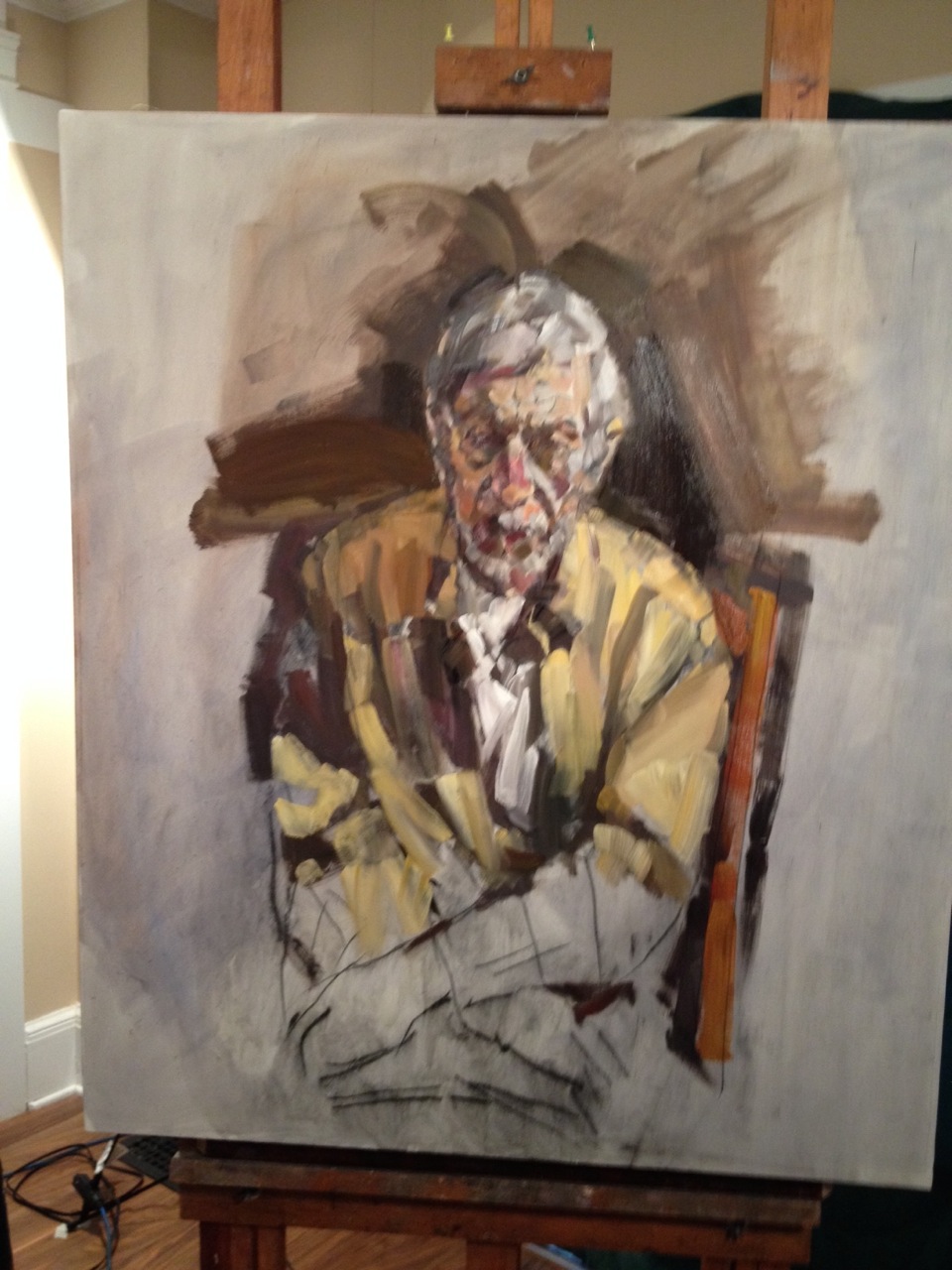
So when Stephen Paints a Picture opened on the 27th. of February we had created a small studio in one corner of the exhibition with the unfinished painting sitting on easel with brushes, paint and a palette on a small table beside it. It should be said that Stephen had just finished his radiation treatment a few days before the opening and it wasn’t certain that he would be well enough to attend, but nothing was going to stop him and he was there. Now we had to figure out the when and how of completing the portrait. So on the 16th. of April, I arrived at Stephen’s house, in Nashwaak Village which is just outside of Fredericton, and now is his studio as well, to see if we could get a head start on finishing the painting as there was no way that it could all be done in the gallery given how slowly he works. Stephen had spent over forty hours on the preliminary oil sketches and drawings during the summer as this was to be a major three by four foot painting.

The following day was a bust as the Saint John River, on which his house borders, was threatening to flood and we spent the day checking the basement and an escape route, but the river crested and all was OK except we were out of wine and beer. The next day we got to the gallery, had a pleasant lunch with Terry, took the unfinished canvas, replaced it with a blank canvas, bought lots of wine and retreated to Naswaak Village.

After drinking some of the wine we decided that it would be better to start painting the next day. After breakfast Stephen had to solve some technical problems before we could start. The big one was to recreate the lighting that we had at my house over the summer so that he could use the oil sketches and drawings as a guide for the large painting. This meant blocking all the windows in the studio and setting up artificial light.

VH 18april14

Portrait of Virgil by Stephen Scott

“What colour shirt do you want me to wear? The blue one or the yellow one?” I asked. During the summer we had used two different shirts for the oil sketches, two with me wearing a blue shirt and two with a yellow one. I had brought both of them with me. “It doesn’t matter. How about the yellow one?”

“Suits me.”

“Wait, I want to put some tape on the floor to mark the legs on the chair.” The idea was to mark everything so that we cold replicate the situation at each sitting. I sat in the chair, while he played with the lights and when he was satisfied, he marked their positions as well.

“It’s bloody cold in here, man, I’m going to freeze my ass off,” I complained.

“There’s a heater upstairs in the bathroom,” he told me.

“OK, I’ll go get it while you play with your paints.”

After I plugged in the heater and sat down again, he said, “Your hair is the same.”

“It’s been seven months and not seven years, but I assure you, I’m getting older and not necessarily better.”

“Sit still for a minute while I figure it out.” He told me to move my head this way and that before he figured he had it right.

“Look, you know that I’m going to move from time to time if I’m going to keep notes of our brilliant conversation.”

“Yeah, but try and keep it to a minimum.”

“The conversation or my movement?”

“Very funny and your left hand goes over your right.”

paintings in the beaverbrook

Stephen & Virgil at The Beaverbrook Art Gallery

“That was quite an interesting painting we looked at in the vault at the Beaverbrook yesterday. Graham Sutherland’s small portrait of Somerset Maugham. A good choice, if I say so myself,” I said. I was talking about a painting that was the first choice for a new project that Stephen and I were looking forward to doing this summer. Starting with the Beaverbrook, the only Canadian location, we want to go art museums in the north eastern United States from Maine to New York and, at each, pick a painting from their collection and have a conversation about it. I’ll put the conversation on my blog, produce an e-book and a short You Tube video on each painting.

“I really like Sutherland’s paintings, in particular, his portraits, but there was another picture on the same rack. A tall thin painting of a man in a grey overcoat,” Stephen said.

“I think I know the one you mean it’s by Walter Sickert. Another great British painter. It’s a shame that artists like Sutherland and Sickert aren’t appreciated as much has they should be.”

“They are in sort of a lost period, but I agree they are both really interesting artists,” he replied, “you know this surface is crap.” He was referring to canvas he was working on. “I bought this at Mt. A (Mount Allison University) bookstore. It was cheap and shows. It’s not sealed enough and it’s sucking up the paint. I’m going to put on a couple of coats shellac. It’ll dry fast. In the meantime, we can have another cup of coffee.”

“Sure, I’ve got no place to go. What did you think that you learned from our show?”

“I think that I have more freedom to move forward. It’s really interesting to see your work in a venue like the Beaverbrook.”

“It’s also cool to have it up in it’s own space for three to four months,” I added.

“In a commercial art gallery you’re lucky if it’s two weeks and then your work that doesn’t sell is generally tied up for a year.”

“The answer, Stephen, is to sell all your work at the opening.”

“Fat chance of that in a place like New Brunswick,” he said.

“I don’t know about you, but a life changing event like the one that you just went through is certainly a good time to reflect on your life. I know it was for me after my heart attack and my own bout of cancer and your crap was a whole lot more dramatic than mine. This much is for sure, you scared the shit the shit out of me.”

“Yeah, it does give you a pause. Life is short and I don’t feel like fucking around any more.”

He started back on the painting and was using quite a long maul stick. “I had one of those,” I said, “I gave it to one of my students when I retired and stopped painting.

Most artists don’t even know about them much less how to use them.”

“They come in handy to keep your hand steady and out of the paint,” he said. The other thing that he did was to add extensions, wooden dowels, to his brushes to make them longer so that he could paint further away from the canvas. Also, different from our Sackville sessions over the summer is that he was mostly standing while he painted rather than seated.

“Painters in the past did use much longer brushes when they were painting larger portraits. It’s hard to buy long portrait brushes these days,” I remarked, “however, I did find some remarkable and beautiful portrait brushes at Pearl Paint in New York City. They cost me a small fortune and I ended up giving them to the same student that I gave the maul stick to.”

“I didn’t want hear that. I wish that you had given them to me,” Stephen said.

“You weren’t around at the time, but I did give you that great French drawing paper and a roll of six foot canvas.”

“So you did. Try and keep your head in one place. You know one thing that we haven’t talked much about is 19th. century English Romantic painters like John William Waterhouse.”

“Yeah, he’s coming back in fashion after being nearly forgotten. I tried to look him up in my 1970 copy of The Oxford Companion to Art, a big honking 1200 page book, and he’s not there. I think his 1888 Lady of Shalott is a hoot, but it’s beautifully painted.”

“I like his The Mermaid around the turn of the century, 1901, I think. Again, a very pretty painting.”

“I guess you could call him a Post Pre-Raphaelite. He was out of date when he was painting his best pictures. It was round the same time as the Impressionists and the Post Impressionists, but he was wildly popular in his own time,” I said.

© Virgil Hammock, Sackville NB, Canada, Thursday, May 1, 2014.

h1

Some Thoughts on a New Group: Part Three

April 15, 2014

I have, in the last two parts of this essay, written about the need for a new method of marketing the visual arts. Artists are not alone in facing the challenges of a new global economy in the ever changing world of technology. The old models of our economic world are falling by the wayside-sometimes this is good and sometimes this is bad, but we cannot wish what is happening aside. Friends of mine tell me that these days people change theirs careers several times during their working lives; sometimes this is by choice and other times circumstance demands it. However, those of us who are artists are often in our trade for the long haul. Traditional painters, who pretty much are the core of this group that we are forming, are not likely to drop what they are doing and embrace a totally different career. Many of us have been doing what we do for close to half a century and, in my case, more than that. Some of the artists in my group would consider changing from oil paint to acrylic, a radical change and one member thinks that oil paint is too modern and sticks steadfast to egg tempera. So what are we aging radicals to do in this world of change?

Well, for a start, realise what we do has value and that there are people out there, our market, who not only like the type of thing we do, but are willing to buy our work. The trick is getting us and them together for our mutual benefit. The commercial gallery system is clearly not working as well as it should and the auction world is an abomination. I recently read an article in the April edition of Harper’s magazine by Nikil Saval, The Office and its Ends, which speaks to the problems of the economy, but also mentions guilds and how they might work in the 21st century. More and more people are working on their own, something artists have been doing for centuries, and there is the need for these same people to work together for not only mutual benefits, but for collaboration while maintaining their individualism. Sounds like something artists should be doing and it is something the members of my group want to do. Of course, there is a rich history of artist guilds that goes back to 15th century, but their benefits and history have been lost somewhere along the way, possibly because of the myth of artist geniuses and half-baked readings of Ayn Rand’s The Fountainhead.

Our ideas of a new guild are not about a large union to protect mediocrity or a way for members to get group health insurance, but a way for like minded individuals to come together for our mutual benefit. To that end, we are starting out very small, and likely remain that way. Our members are all established professional artists and who, at the moment, limit membership to our group by consensus. Is this elitist? Yes, of course it is. There is no reason why there cannot be many guilds of like-minded artists. Rather along the lines of Chairman Mao’s let a thousand flowers bloom or something like that. The important thing is that we understand the value of our ‘work’ and move it to market to the benefit of our members. We are not setting standard prices. Our members’ work varies in price and it’s up the artists to set a value for their art, but what we want do is sell more of it and keep more money in the hands of the artist, the producer. How do we do that or propose to do that? Of course, there is the internet, the world wide web, but that is only the means, a means, to communicate. The hard part is getting the work to the buyer and the money to the artist, be that across the street or halfway around the world.

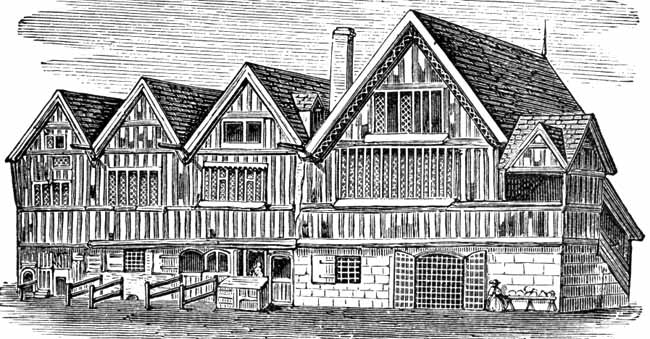
Nottingham Guild Hall in 1750

Nottingham Guild Hall in 1750

I don’t think that our guild has any secret formula to success. We need to engage people who know how to use technology for our ends. Nothing is more stupid than over-estimating your own intelligence. Knowing what you don’t know is far more important than knowing what you do know. One other important aspect of our guild is mutual trust. If we don’t trust one another we are doomed from the start and, hence, in our case, we have limited membership to people who know and trust one another. We know that we have to invest both money and time into our guild for it to work, but it is still a group of individuals. We know that we have to start out locally, but move as swiftly, as we brave, to larger national and international markets. That would mean forging alliances with other groups and individuals.

Anyone who is going to buy works from our members, at least for now, is going to want to see the art first hand and that has its set of problems. Our members would not want to send their works half-way around the world without being assured they either they are going to sold and they see the money or there is a way to get the works safely back to them. We are looking at the idea of agents in other centres who would work with us and at the possibility of pop shows. All of this requires work on our behalf. We have only just started to get our minds around the new realities of today’s world. We feel that many commercial art galleries are going the way of record stores, remember them? This doesn’t mean that there aren’t galleries out there that can reform themselves to work in this new order, but it’s a quantum change. Look, if people can sell high-end fountain pens over the internet, then I’m sure that there is way to move nice old fashioned oil paintings as well. We just need to find the sweet spot.

© Virgil Hammock, Sackville NB Canada, E4L 1G6, Sunday, April 13, 2014.

h1

Some Thoughts on a New Group: Part Two

April 8, 2014

There can be no revolution without revolutionaries and there in is the problem with visual artists taking control of their own professional lives. We live within a romantic myth of our own making much of which can be traced back to our professional training in art schools and universities. At most of these institutions we are taught that our shit doesn’t smell. In the interest of full disclosure, I should add that I do have a BFA from the San Francisco Art Institute and a MFA from Indiana University; taught at three different university for a total thirty-seven years, nineteen years as a department head and was president, for several years, of the University Art Association of Canada. So, I have some insight into the myth making racket.

The whole question if there are too many art schools and university art departments turning out too many artists is a different question for a different time, but in a word the answer is, yes.

I alluded to, in part one of this essay, to the fact that it might be good thing to take a look at 15th. century Flemish art guilds as a possible model for 21st century artists. Many artists agreed that it might be worth a look, but several suggested that guilds, at least, in the form that I suggested, would be elitist and exclusionary. My answer was yes they would, and should, be both. Frankly, elite is a word that gets a bad rap when its associated with the visual arts, but does fairly well when its used to describe athletes. There are some groups, like a college of surgeons, that by their very nature are exclusionary and limited to those who have passed some hurdles. Of course, I mean entry based on merit and talent and and not limits based on race, sex or religion.
Great artists, and surgeons, come in all shapes, colour, sex and beliefs. Picking a great artist, much less a good one, might be a bit harder than picking a corresponding surgeon. I don’t know about you, but I usually look for a surgeon who has lot of practice and patients who survive. As for artists, it is Hobson’s choice and I would like to think that I am Hobson.

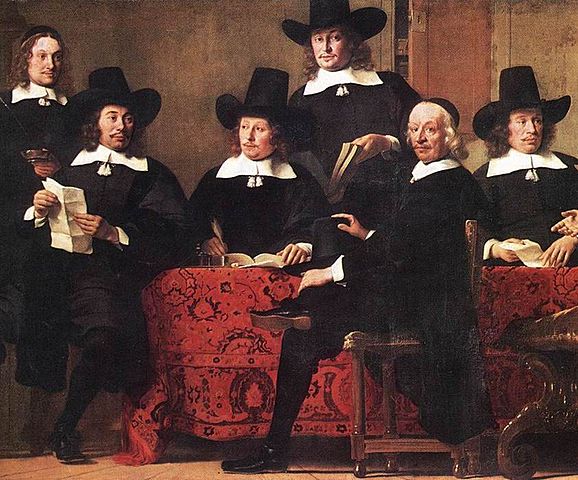
Governors of the Wine Merchant's Guild of Amsterdam, by Ferdinand Bol (1663)

Governors of the Wine Merchant’s Guild of Amsterdam, by Ferdinand Bol (1663)

Back to the making of artists, we, the art teachers, usually cover what, in our mind, are the basics, some studio practice, a bit of history and a fair amount of bullshit. Normally anything the student comes up with is lauded as a work of creative genius. Who in their right mind would wants to end up with a bad student evaluation? Every four years a small army of newly minted BFAs march across convocation stages and into oblivion. Of course, there are great schools and strong departments; great students who turn into great artists. They are in the minority, however, and one likes to think that these were the places we attended or taught at, hopefully both. We all live in hope and fantasy.

Assuming all the ducks, or artists with some talent, are all lined up, now what? Leaving aside the lucky few with a MFA who manage to get, and keep, a tenure track appointment at an university and that would be around six in Canada, in a good year; the rest are left to their own devices. Fame and fortune may await some who move to a major art centre. In Canada, Toronto is the centre of the art universe. But it still leaves the majority of budding artistic geniuses who haven’t the wherewithal to move an art capital or actually like it where they live. One choice for these individuals is to live in obscurity, not to mention poverty, die, hopeful young, and hope to be discovered and famous after you are dead. Notice the two hopes in the last sentence and the third hope, outside of the dying part, of this scenario working out are slim and if does other people make the money.

Ah, but there are commercial art galleries and artists-run centres across this great country of ours where things do happen. In the commercial galleries there are exhibitions where over the punch bowl, higher tone galleries offer wine, art works are sold for a couple of hundred bucks or so of which the gallery takes its cut of forty or fifty percent off the top after expenses. If artists are lucky enough to make a hundred or two such sales a year they might gross about three quarters of the salary a unionized postal worker. In artist-run centre sales are viewed as déclassé. Monies are made in artist’s fees, sometimes as much as three or four hundred dollars. In these setting, artists meet with their friends at openings, many of whom will have shows in the same space at a later date, where accolades of their artistic genius are shared and the public’s indifference to said genius is evident. Here everyone is free to buy beer at the cash bar.

Is there another way that visual artists might make living that would allow such luxuries as eating and raising a family? The answer, my friend is written on the wind. Not that this line has already been chosen, but the answer does require a tremendous of rethinking on the part of artists. First artists have to value their own work and, second, they have to value the people, the public- who consume or may consume their work. What to do? Here is where the guild concept raises its ugly head. Did I say ugly? Brilliant, might be a better term, but only if visual artists of all stripes get off their asses. Ugly would apply to the art establishment who would see their serfs, the artists, disappear along with their product, namely art, from their grasp.

I would not propose a single guild. There should be many guilds; all small and all local at the onset. They require, as I wrote in part one, made up of like-minded individuals who see the benefit of marketing their work in a co-operative way. Of course, there could be a loose union of guilds both nationally and internationally. How can these guilds be established? There are likely many ways, but I’ll leave that topic until next week. I, and the others in our small group, don’t have all the answers. We are still at the questions stage and would welcome ideas.

© Virgil Hammock, Sackville NB, Canada, Sunday, April 6, 2014.

h1

Portrait of an Artist

March 24, 2014

From the Telegraph Journal Salon section 22 March 2014

Last summer, adjunct curator Virgil Hammock sat for a portrait by Fredericton artist Stephen Scott. Hammock documented the almost two-month experience, sharing their conversations and his own thoughts about art. The collaboration has been assembled as the exhibition ‘Stephen Paints a Picture,’ on display at the Beaverbrook Art Gallery until June 8. Here are some excerpts from Hammock’s documentation.

Read/Download the PDF here:

Portrait Of An Artist TJ

The blog series: Stephen Paints a Picture