Archive for the ‘Virgil’s Thoughts’ Category

h1

Is art necessary?

July 31, 2013

Is art necessary? The short answer is no, but it is desirable, even beneficial. I live in a small university town in rural Canada where there is a wide divide between town and gown. I spent a long time, some thirteen years, trying to bridge this gap by serving on the town council where I championed arts and culture. All of this came to a rather ignominious halt last year when I was turfed out of my seat in a run for my fifth term by an electorate who where unhappy with my arts bias or at least that was my take on the situation. It could be that they we just tired of my smiling face and wanted a change.

The fight was over the question of buying art for our new town hall. We have a bylaw that says that up to one percent of the total cost of new construction should be spent on art. This was a bylaw that I helped push through council years before the new building was on the table. The motion was passed easily because there was no new construction and it sounded good at the time, however, there is a big difference between theory and practice. When the new building did come along I pushed very hard to have it include public art within the budget. A messy public debate ensued which wasn’t helped by being bushwhacked by fellow councilors who were playing a populist role to appeal to what they correctly identified as their base. My base, on the other hand, offered their support, but, as it turned out, were too busy to vote in the following election. Unhappy people are the ones who are most likely to vote in municipal elections while my non-voting friends assured me that I was a shoe-in.
Eugène_Delacroix_-_La_liberté_guidant_le_peuple-2

Sour grapes? Maybe, nobody likes rejection and it is natural to try and justify your defeat. It wasn’t like I went down in flames as I lost by about sixty votes and, in retrospect, it was a good thing as I could rethink my life and do things like focusing on my writing. Still, I was unhappy with the debate as it was art that suffered and not myself. It took, believe it or not, over seven motions over a period of over a year to get the art budget for the building approved. Every time I thought that it was in the bag, I had to counter a motion to cancel the project. The arguments, which played out in the local press, centered on the usual stuff: art was a luxury that we could ill-afford; art was elitist; the money could be better spent on filling pot-holes and that, if we did buy art, it should be by local amateurs or artists who lived within the town limits and children. It should be noted that we are a town that is noted for its arts community. Many professional artist live in and around our town, we have a famous university art gallery, an artists-run gallery and a good commercial gallery.

I did prevail and, to its credit, a majority of council supported a public art budget for our new building. A public jury was formed and there was a call for proposals. It was open to all artists in the country and stated that the projects had to say something about the town. The jury members, with the exception of myself, were not arts professionals, but local people who had an interest in the arts. I served as chair of the committee and provided professional advice, but did not vote. In the end they came up with a half dozen projects, all by artists who had a connection with the town and we ended up spending less than the one percent budget.

The art was produced and installed. Most people who look at the works seem to like them. The building would work as well without the art and it would not be missed if it had never happened. In our neck of the woods it is possible to live a full life without the benefit of art, public or otherwise. It is not a lesser life only it is an artless one. Our university art gallery is the oldest in the country and one of the largest. It is open free of charge to the public, they have an active outreach programme and many outstanding exhibitions, yet a majority of the non-university population of the town have never stepped foot in the gallery. Our artist run gallery runs quality programmes for the youth in the community yet most local people don’t even know where it is and it is right downtown.

Was it worth the efforts of these two galleries and my own to promote art in our town? Yes, of course it was, but I have come to the conclusion in my case that it is time that I took a rest and concentrate on my own work. Not a word has issued forth from town hall on the subject of art and culture since my defeat and that is OK. Life will go on just fine. I am reaching the end of my life, I will be seventy-five next week, it is high time that I have a close look at my life in the arts and try to figure out if it was all worth it. It’s not all that bad, I have good friends, my mind still sort of works and art is still a good thing as it has been over the last two or three thousand plus years. I am reasonably sure that when I am dead and forgotten that there will be stuff around, art, that will endure and will enrich at least some peoples’ lives. Tempus abire tibi est.

© Virgil Hammock, Sackville NB Canada, Friday, 26 July, 2013.

h1

The Philosophy of Selling Watermelons in the Big City: Part Two

July 24, 2013

Starting where I left out on how to make a living as an artist in Maritime Canada I suggest that we throw out traditional marketing practice and start anew. The best possible solution would be to eliminate the need to sell your art. The very best way to do this is to be born to wealthy parents. This has worked very well for some artists in past such as Degas, Toulouse-Lautrec, Whistler and Sargent, however this is difficult to do after the fact. The next best method is to marry well and use their money. I, on the other hand, married often with disastrous results. The third way is to have a tenured appointment in fine arts at a good university. This allows you to advice your students to stay true to their art while you take no risks yourself. This I was able to, but it is becoming harder as universities close their fine arts departments or hire teachers for peanuts on a course by course basis. Failing these three admirable choices, you are left with trying to flog your work.

Galleries often refer to their artists as a stable. Note to artists: a stable is a place where they keep horses or, perhaps donkeys. I know that Jesus was born in a stable as well and although it was a beginning of a great religion, it did not work out well personally for him. In this age of the web, we need a new way of selling art and, perhaps, one where the artists are in charge. It is common knowledge that visual artists are unable to tie their own shoes much less take charge of their commercial lives and need the wisdom of others to keep food in their mouths. There is a model from New York City in the 1960s that failed, but was interesting in its revolutionary ambition and that was the Park Place Gallery. It was an artists co-op where they hired their own director and put on series of important exhibitions of their members. It was one of the first galleries in SoHo and was to be a whole new direction in the marketing. I knew some of the artists, Dean Fleming, Forrest (Frosty) Meyers, Peter Forakis and Leo Valledor who were either teachers or fellow students who had been in San Francisco and had moved to New York. I did visit the gallery a number of times and, like its members, I thought that we were on the ground floor of a new order of marketing art, but that was not to happen. Why?

A group of artists like those in Park Place are difficult to control, rather like a clowder of cats. There is the issue of egos. While we do have trouble with our shoe laces, we do often have a high opinion of our own artistic talents. Co-ops need people to co-operate and there is the problem, if visual artists were co-operative they would likely not have become artists in the first place. Most visual artists and writers are hermits when it comes to their production and do not work well in groups. I hang out in my basement office with my dog, who provides company, and bang away on my computer. When I need to talk to people, I go to the local coffee shop and converse with the usual suspects. However, artists, myself included, do need an audience and a way to make a living.

Struggle_session_poster_wikimediaThere needs to be a whole new class of people to promote and sell the work of visual artists. They need to act as agents, managers, who work directly for the artists. Some of these people very well might be existing gallery owners, but the business model would be very different. The web does give visual artists a world wide audience, but most buyers want to see actual works of art before they part with their cash. Traditional commercial gallery models are not really efficient in a world market in particular if the artist lives in a rural area like Maritime Canada. Artists have better things to do than deal directly with customers in far away places, but there is the need to know who might be interested in your art nor would it be a good thing for an artist to send an art work away to an unknown buyer on approval and hope that money will follow.

There needs to be another person or persons in the equation; someone in the area of the purchaser who physically shows them the art work and, if there is a sale, collects the money, takes a modest cut, and sends it to the artist. These agents would work for a number of artists, be knowledgeable about art and be bondable. There should be, via the web, direct communication between the artist the would be buyer before there is any contact with the artist’s agent. Remember, in this model the agent works for the artist. The agent is not selling the artwork and passing half to two-thirds of the price to the artist which happens in the gallery model where the dealer has overhead and actively promotes the artist. In my model the artist must take an active role in their promotion. This means having a good, usable, professional web site and that means hiring professionals to set up their sites. Empowering visual artists to take active charge of their professional lives requires a radical shift in thinking. Artist are not taught in art schools about business, but they are assured that quality will out and that is just not true.

Another idea that a rural artist, or a group of artists, might explore with an agent, or agents, is pop up exhibitions in major centres. These exhibitions need not be for more than two or three days and would need to be carefully planed to be successful. They would act as a showcase for the artist or artists and be controlled by them not the agents. However, this is the subject for another post. I also realise, not being an original thinker, that many of my ideas on watermelon retail are being done here and there already, but what is apparent is that if artists, both rural and urban, want to make a full time career as visual artists there has to be a radical rethink in the way that things are done.

© Virgil Hammock, Sackville NB Canada, Monday, 15 July, 2013

h1

The Philosophy of Selling Watermelons in the Big City: Part One

July 17, 2013

The other day I was speaking with an artist friend of mine about the difficulty of selling art works in Maritime Canada. Truthfully it was about selling art anywhere, but we were sitting in a cafe in New Brunswick and the situation here is particularly hopeless. The market is flat, we have the highest unemployment rate in the country and the middle class, as elsewhere, is going down the tubes. Not a pretty picture for traditional commercial art gallery sales. What to do? There appear to be no easy answers.

Now my friend is a senior artist who has been making a modest living as a professional painter for the last thirty-five years. From the day that he graduated from my department I had no doubt that he would remain true to his vision of being a full time artist. He was then, and remains, a realist painter and continues to live mostly in New Brunswick. I am proud of him and the hard work that he has done as an artist. However, it has not been easy for him or for other full time artists I know in this part of the world to make living off their work. He could have moved to a major art centre and tried his craft there, but if all our artists did that, this would be sadder place. My friend has lived and worked extensively in other places in the world, but has always returned here where he feels he belongs. Art is often about a sense of place. Unfortunately some places support their artists better than others. Canada does not have a good record of doing well for her visual artists. Some regions, like the Maritimes, are particularly bad in their support. Why?

Lack of a large population is a major problem. There are fewer people living in Maritime Canada (New Brunswick, Prince Edward Island, Nova Scotia) than live in the city of Toronto: 2,615,000 to 1,836,700 give or take a person or two and that doesn’t count the area around Toronto which brings the population to over five and a half million. There is a serious lack of people here who have the remotest interest in the visual art living in the region with the possible exception of Halifax and even there it is a tiny number in the scale of things. The rich collectors in a place like Halifax, and there are a few, tend to buy their art in major centres outside the region and even outside of Canada. The commercial galleries are not generally of high quality. There are only two quality civic galleries; the Art Gallery of Nova Scotia, in Halifax, and the Beaverbrook Art Gallery in Fredericton, New Brunswick. There is also the Confederation Art Centre in Charlottetown, PEI, but it is not in same class as the other two. If people don’t see first class art as part of their lives, then they are unlikely to want to buy art for their home and many people in my region struggle to put food on their tables much less buy art. The provincial governments support of the arts leaves much to be desired and federal support is not much better.

Why, then would any sane artist want to stay and work here when the odds against making a go are so remote? For some it is a sense of place; I was born here, I belong here, it is my home; for others, it is place I want to be because of the quality of life. The latter want to be here because it is not Toronto and they like a scale of life and, indeed, the people here. It is possible to like the life style and people even if those same people don’t give a damn about your art. In my own little town, which is perhaps the most arty small town in the Maritimes, a majority of the population don’t give two hoots about art and high culture, but I love them nonetheless and I wouldn’t live anywhere else.

Red_Guards_wikimedia
All of this brings me to the title of this post: The Philosophy of Selling Watermelons in the Big City. Back in the very early 1960s I subscribed to the Peking Review (It was Peking then not Beijing.). God knows why, but I think I was testing the FBI to see if they cared about what I was reading. It was a hell of deal if you managed to get the five bucks to them for the one year subscription they kept sending it year after year hoping that reading it would make you a Maoist. I viewed it more for comic relief from mainstream right wing American newspapers. When I spotted the article on watermelon selling, I cut out the headline and used it in a collage, but not until I read the piece of wisdom from my Red friends. It all boiled down to the Red Book and Chairman Mao’s thoughts on the subject of selling stuff which was rather along the lines of ‘build it and they will come’ and, of course, you need a good watermelon.

The most obvious answer to coming up with a different model of commerce for my artist friends is dragging them into the early 21st. Century. We all now live in McLuhan’s Global Village and have the means, the web, to make ourselves known to a whole lot of people some of whom might still want to buy old fashioned wall art. Another problem is getting artists to give up on the traditional artist/gallery model: put pictures on the wall; hope people come to the gallery (some galleries work hard to make this happen and others less so); hopefully sell some pictures; and divide the money between the artist and the gallery. Most visual artists, even if they are wild-eyed avant-garde in their own work, are very conservative when it comes to changes in marketing their products. It is time, my friends, to throw everything out and start anew, but I am getting to my self-inflicted limit of around 1000 words per post, so I will continue this with part two of watermelon selling next week.

© Virgil Hammock, Sackville NB Canada, Friday, 12 July, 2013.

h1

Girl With a Pearl Earring

July 10, 2013

Girl With a Pearl Earring
Dutch paintings from the Mauritshuis de Young Fine Arts Museums of San Francisco (26 January-2 June 2013)
High Museum of Art, Atlanta (23 June-29 September 2013)
The Frick Collection, New York City (22 October 2013-19 January 2014)
(Published in Vie des Arts, #231 Summer 2013 pg. 64-65.)

There is much more to this exhibition than a chance to view Vermeer’s masterpiece Girl With a Pearl Earring as it is accompanied by thirty-four other paintings from Holland’s golden period from the collection at the Mauritshuis in the Hague. The Dutch museum is closed while it undergoes a major renovation and this has given the opportunity to tour some of its collection to North America. San Francisco’s DeYoung Museum, where I saw the exhibition, was its first stop; it is now at Atlanta’s High Museum of Art and later this year a group of ten works from the exhibition will be at New York City’s Frick Museum. It would certainly be worth a trip to either place to see this remarkable collection as such pieces seldom travel from their home museums.

The work in the exhibition is divided into five parts, or themes; portraits and thonies (idealised portraits of non-existing subjects like Girl with the Pearl Earring); landscapes and seascapes; genre paintings; and still lifes that, through their execution, illustrate the triumph of the bourgeoisie in 17th Century Holland. It is the commonplace made concrete that made these paintings revolutionary in the history of art. The short lived Dutch Republic, a golden period, was the result of a hard fought bloody revolution with Spain which split the Spanish Netherlands into what is now Holland and Belgium although the later remained under the Spanish yoke for a long time after Dutch independence. It was as well a fight over religion; Protestantism in Holland and Catholicism in the south of what remained of the Spanish Netherlands (Belgium) and that too played itself out through art of both regions.

Johannes_Vermeer__The_Girl_With_The_Pearl_Earring_wikimediaWhat, of course, draws people to the exhibition is the painting of its title, Vermeer’s Girl with a Pearl Earring, and they will not be disappointed. Many of the viewers have seen the film of the same name and are drawn to the fictitious romance around the painting and others, myself included, just want to see a painting that is so central to their understanding of the history of art. Like the Mona Lisa, Girl with a Pearl Earring has become a cliche that has taken away from its value as a work of art. Vermeer’s paintings stand out in the crowded art history of accomplishment of the 17th. Century. There are only thirty-six known paintings by Vermeer and the Girl with a Pearl Earring is perhaps, along with the View of Delft, his best known work.

Why is Girl with a Pearl Earring a good painting? There are many reasons and chief among them is its composition; odd by the standards of its day, she looks at us by turning her head to the viewer bathed in shaft of light setting her apart from a dark background, lips slightly apart. Our eyes are, indeed, drawn to the single large pearl earring on her left ear. She wears an exotic turban that was not common to the time. She is, by any standard, an object of desire. Historians cannot name her and many think that she is a thonie or an idealised combination of many women. There is the speculation, notably by David Hockney, that Vermeer used a camera obscura to help him master realism, I think not, but that is a whole other subject and, in the end, doesn’t effect the quality of his painting. We like Girl with a Pearl Earring because it is a drop dead beautiful work of art.

There are thirty-four other outstanding 17th Century Dutch paintings in this exhibition and I would have been happier if the show had been called something like Thirty-Five 17th Century Masterpieces from the Mauritshuis Museum, but that would be mouthful and not the good marketing ploy of its current title. You have seen the exhibition, now buy the coffee cup or necktie.

There is an excellent early Rembrandt, another thonie, in the exhibition, Man with a Feathered Beret. We have two imaginary people with ‘a’ something, an earring, a hat; they make a nice couple. One wishes they could go out on a date, he in his hat and she with her earring. Another favourite painting of mine that is included in this exhibition is the small work by Paulus Potter, Cattle in a Meadow. Potter is simply the best Dutch painter of animals, in particular cattle, of all time. What a tragedy that he died in his twenties. Another artist in the exhibition who died far too young is Carel Fabritius whose most famous painting The Goldfinch is included. Fabritius, a student of Rembrandt, died at the age of 32 in massive gunpowder explosion in Delft in 1654 the same year The Goldfinch was painted. This very small, 33.5 x 22.8 cm, work shows, as does the Potter, that great paintings need not be about great or important subject matter, but can reflect the everyday things in our lives.

I could write at length about every painting in the Girl with the Pearl Earring exhibition as they all have something important to say, but that would take a small book. What is important is that Dutch painting of the 17th Century, and this exhibition has great examples, is a mirror of what, in the following four centuries, has become the modern Capitalist life we now live in Canada; certainly far from perfect, but better than what went before it. These paintings are a celebration of lives lived well and their beauty is also a celebration of art done extremely well.

© Virgil Hammock, Sackville NB Canada, Wednesday, 15 May, 2013.

h1

Too Many Photographs, Too Little Art

July 3, 2013

Recent articles in the press mirrors some of my own problems with the boom of digital photography. There are laments that despite the billions of images being recorded every year by everyone and their dog with digital media results in very little good photography much less art. A friend of mine joked that this signaled an end to elitism, but I think it invokes more of a victory of mediocrity.

The problem is just the sheer volume of images. In the past you needed a camera, film and way to develop and print the images. Happily sharing the images then was more difficult as well, limited to passing around photo albums and, if you were very unlucky, slide shows at friend’s homes. Today’s point and shoot cameras allow us to publish for all the world to see within seconds on social media. Even digital cameras are going the way of the dodo as a majority of images today are taken on smart phones.

I was trained in a sixteen week course as a combat photographer in the mid 1950s at the US Army’s Signal School. Believe me, they drummed photographic technique into your head so that you would never forget it. Later I started as a photo major at the San Francisco Art Institute where we were taught all the joys of the F64 Group as this was the place where Ansel Adams had once taught. Although he was long gone, his ghost lived on. I stupidly failed the course at SFAI by changing majors to painting and drawing, failing to formally withdraw from my photography courses. I wasn’t too bright at the time and I still am not the brightest bulb in the chandelier, but I do know something about taking pictures and luckily this relies on my long term memory which is still good for someone in their mid 70s; just don’t ask me what happened yesterday.

virgil

Let me take you through taking a photograph as I did in the army. Yes, and that’s me in the photograph in 1957 in Korea. The very picture of professionalism. The camera is 4×5 Speed Graphic, I believe we called it a PH47, Camera, Still. First, drop the bed, the front cover; pull out the bellows and lock it; insert film holder, making sure back shutter is open; remove slide from film holder; figure out and set shutter speed and f-stop; cock shutter; if, using flash, screw in bulb (which entails a whole other exposure calculation); focus and release the shutter. Such was the army’s teaching methods, hit you over the head with a stick until you get it, I can still do this drill in my head. The result was one exposure and you still had to develop the film and make a print. Today, with one of my point and shoot digital cameras, (and that’s me again, this time with the white hair) point, push the button down half way, then down fully and it is done.

virgil today

A photo shoot when I was in the army was usually one exposure and, if you were lucky, another for good measure and the picture better turn out. The generals whose pictures I was taking–I was in public relations–did not take kindly to me making mistakes. Mind you, my pictures were a long way from art, but the tedious method of taking photographs served me when I thought that I was making art after the army. The point, if there is one, is that still film photography required thought before you took the picture. (Good photography then and now is, of course, more about the eye than technique.) However, you tended to be more careful when every shot counted and you had to wait to see results after your film was developed and printed.

The golden age of photojournalism is long gone, along with the magazines like Life that week after week published high quality photo essays. Newspapers, themselves a dying medium, are firing their photographers and relying on reporters taking news pictures with their smart phones. Television replaced newspapers and magazines as sources for news and now television is being replaced by online media which is quicker off the mark. What is lost is a time for reflection much less any editing that might lead to quality. There is certainly no lack of choice in methods of seeing still and moving images in today’s world and some of them are bound to be first rate. The problem is finding the good stuff within the vast ocean of mediocrity that makes finding a needle in the haystack look easy.

Yes, as Marshal McLuhan predicted, yesterday’s technology becomes today’s art: historic painting by photography; still photography by motion pictures and they by television and so on, but sometimes things are lost in this march of progress. Digital photography is a marvelous thing. I have a drawer full of high end digital cameras and I am doing my best at trying to be photographer again. It is rather like signing on the crew of the Titanic for its first voyage. At the time of my first kick at the can in this profession, photography was a calling. Now you don’t even need a real stand alone camera to take decent pictures and six year-olds with an iPhone are pretty good at it. I would like to think that I still have an eye, but who cares? Don’t get me wrong, I am not feeling sorry for myself. Stuff happens and I am not about to stop it or stand in its way; however, perhaps too much of a good thing might, in the end, be just too much.

© Virgil Hammock, Sackville NB Canada, Friday, 28 June, 2013.

h1

Things are Getting Better and Better

June 26, 2013

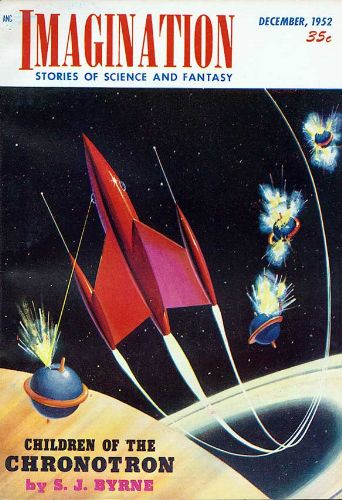
Gee, what happened to the future. I remember seeing Stanley Kubrick’s film, 2001: A Space Odyssey, when it was released in 1968 and watching folks, all wearing spandex, flying to a spinning space station on their way to the moon on a Pan Am (remember them?)rocket ship to the music of Johann Strauss’s The Blue Danube. A dozen years after 2001 nothing like that has happened in commercial air travel. Last time I took a trip it was in a jet that was no faster than those in 1968. My fellow passengers were dressed like a group of DPs from World War II and they were the fashionable ones. The comfort level was that of a troop ship except more crowded and a bag of pretzels was three bucks. Let’s not forget the flying cars in Back to the Future: Part Two which was released in 1989 and showed us the world of 2015, I guess we still have two years for the cars. Wish my car could fly to avoid the gaping potholes on the third rate highways in my part of the world.

Yes, while we still have no bananas, we do have the wonderful world of the internet which wasn’t in my life or movies in 1968; mind you, Marshall McLuhan had thought of it before that with his Global Village. The internet allows me to post this on my blog from the comforts of my basement. I can also from the same place take free courses from ‘the best professors in the world’ via MOOCs (massive open online courses) without spending the quarter million dollars plus it would take to do an undergraduate degree at a joint like Harvard. My basement is sounding better all the time. Don’t get me started on the subject of online chat groups with ‘hot’ chicks from around the world. Who needs flying cars when everything is a keystroke away.

It is also nice to know that my government is able to keep track of all my calls, what happens on my social media, and anything else that happens on my land line, cell phone and computer and, even better, share it all with our best friends, the American government. Now that is progress. Perhaps the best way to have a private conversation with someone would be to send them a first class letter. Of course, in our neck of the woods, that is a very slow process. To get mail across the border to Amherst, Nova Scotia from New Brunswick, and I live fifteen kilometres from there, my letter goes a couple of a hundred kilometres the other way to Saint John, New Brunswick and from there the mail would go to Halifax, Nova Scotia, two hundred kilometres from Amherst, and then back to Amherst; all of this by truck. It is best to drive over, or even walk, and talk to someone in person, but those are the joys of centralization and Canada Post.

We sort of live in the present, conveniently forgetting the past, while thinking we know what will happen in the future. For some, the optimists, everything was better in a golden past and others, still optimists, it is the future when things will be wonderful. The pessimists, of course, think everything is horrible all the time–past, present, future–and they will never be disappointed. I think that the present is the problem. We live in a time of too much data, flooded with information, that we do not have the time to absorb much less understand. Thanks to the internet, everybody is an expert on everything. Just Google and it is all there in raw, naked, truth. Never mind that much, very much, online information is false and trying to find truth, if such a thing existed, in the maze that is today’s information network, is nearly impossible. We are information rich and knowledge poor.

Imagination_cover_December_1952The dreams of Modernist art are as lost in today’s contemporary art as those of commercial moon flights and flying cars. Modernism lost its fight long before this new century to the tenets of Post Modernism. Artists heroes fighting society’s conventions through their art are passé and have been replaced by the likes of Damien Hurst making millions off mass produced paintings of polka dots. If individual genius is lost, market value remains. Auction prices set new records every week be they for Renaissance masterpieces or, the before mentioned Mr. Hurst’s half a shark. It’s a real pain, in the you know what, if despite the effort of an artist to be a revolutionary that their work becomes the stuff of the marketplace. This is nothing new as the famous Abstract Expressionists either sold out, the smart ones, or were sold out, the unlucky ones.

The good thing about today as the super rich get richer and the rest of us slip back into a new order of serfdom that there might be a new age of art patronage. The hard part will be if these new patrons will have the good taste of those of the Renaissance or even the Middle Ages. The signs of this have not been that good thus far, but I must remember that there is always a brighter tomorrow and everyday, and in every way, things are getting better and better.

© Virgil Hammock, Sackville NB Canada, Friday, 21 June, 2013.

h1

The Pleasures of Small

June 19, 2013

A couple of weeks ago I had the urge to leave Sackville and drive down to Maine and visit a couple of art museums or, as we call them in Canada, art galleries that are on my lists of favourites. They are the Portland Museum of Art in, of course, Portland and the Farnsworth Art Museum in Rockland. Both museums are, by the standards of major institutions, small and that, in my mind, makes them special. They are not small either in their ambition or quality, but they are places that you can visit without getting lost or overwhelmed. They are places that make you feel welcomed. They have staff, both professional and volunteer, who seem to be happy to be there. In both places I come out happier than when I entered.

PaysonFacadeCloseupThe Portland Museum of Art is the larger of the two. It is Maine’s largest art museum in Maine’s largest city, but, again, what is large in Maine is small by other standards in New England. Portland’s population is just over 66,000 and I don’t know how many Portland Museums you could fit into the Metropolitan Museum of Art, but it would be an interesting statistic. Portland has other treasures, there are world class restaurants, its old port area is charming and it is a very walkable city, but the Museum of Art is in a class all its own. Each time I visit, I come away refreshed. It has a very fine and interesting permanent collection; a good book store, that has books I cannot fine elsewhere and nice little cafe that keeps me in the museum a bit longer. Their special shows are always interesting. This time there was an exhibition on loan from New York’s Museum of Modern Art of The William S. Paley Collection: A Taste for Modernism which I might review for Vie des Arts in the fall issue. It certainly was an exhibition that was interesting to me and rang all my bells.

I have spent quite a bit of life in large museums around the world and have been suitably impressed by their collections and blockbuster exhibitions, but I usually come away exhausted even if I am exhilarated. Too much of a good thing is often just too much. Blockbuster exhibitions often are accompanied by blockbuster crowds which make looking at the art difficult if not impossible. I am happy that great art is made available to the masses at least those who can pay twenty-five bucks a head for the privilege and, that with my press card, I can get in free and sometimes even to special press viewings, but I certainly prefer the atmosphere of a venue like the Portland Museum of Art where I can see the stuff on the walls. Do I sound like an elitist? Yes, I am an elitist, but the Portland Museum is far from being an elitist place. While I was there kids on tour were running all over the place and the folks in the place looked reasonably normal to me, just that there were not so many of them that you could not see the forest for the trees.

Of course, museums, small and large, want to get people into their institutions and, if need be, will move Heaven and Hell to do so. There are several million people living in close range of Portland and I am thankful that all of them don’t want to visit its art museum at the same time. Frankly, many visitors to the area are likely more interested in lobster rolls and steamed clams than fine art. I should be careful about telling people how wonderful the Portland Museum of Art is. It could become like a restaurant that becomes so famous, and Portland as a couple of these, that it takes months to get a reservation. I am afraid, however, that the cat is truly out of the bag and that it is common knowledge that the Portland Museum of Art is one of the finest arts museum, small or otherwise, in New England.

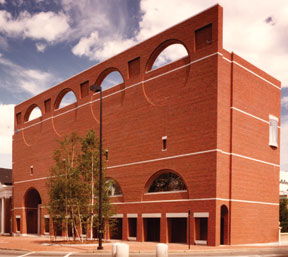
farnsworth exteriorThe Farnsworth Art Museum is very different from the Portland Museum of Art. Located in the small harbor town of Rockland with a population under 8000 it is north of Portland and halfway to Bar Harbor. A smaller gallery than Portland’s, but with a strong regional collection that includes not only Maine born artists, but artists who painted in the state like Edward Hopper, Marsden Hartley, Rockwell Kent and John Marin. An interesting inclusion is Louise Nevelson who was a Rockland native. You will also find works by more modern artists who worked in Maine such as Alex Katz, Neil Welliver and Robert Indiana. However, what draws people to this gallery is its collection and connection with the Wyeth family; N.C., Andrew and Jamie. There are important works by the three artists in the museum and more by them in the Wyeth Center, part of their complex, which is in a converted church across the street from the main building. The main exhibition at the center this summer are original painted illustrations, mostly in oil, by N.C. Wyeth the father of Andrew and grandfather of Jamie. The exhibition is a reminder of what book illustration once was and that art can run in families through generations as it did in the Middle Ages and the Renaissance that really was a family business founded on hard work and solid training.

Both of these art museums show that excellence can be achieved with limited resources in smaller communities as long as there is a will by the people who run them and those who support them. There are many more really outstanding small fine arts galleries to be found all over the world. I have visited many, but there are many more for me to see. Well, I think it is time for a bucket list. Any ideas?

© Virgil Hammock, Sackville NB Canada, Wednesday, 12 June, 2013.

h1

Blue is for Bach

June 12, 2013

Do you see music in colour in your mind’s eye as you hear it played? I do and there are likely many others that who as well and I see these colours spatially. It is a type of kinetic vision that happens; stuff, there is not a better word for it, moves around and I see things. It happens, by chance, that I am listening to Vivaldi’s Four Seasons on my computer as I write this sentence and, as I listen, I have a sense of time, space and colour that is totally abstract, but somehow real as well. Hard to write about, but a genuine reaction nonetheless. I have read that this kind of reaction to music is more common to visual artists than other people. There is the idea out there that visual artists think differently than other people and that is what makes them artists. Notice I use the term different and not better as there are many ways of thinking.

Painting, drawing and photography are about space. Photography is a little different as you are reducing the reality in front you by the camera rather than hand and eye into another form of reality. Of course, you are using your eye in photography, but in not in the same way you do with painting or drawing where you start with a blank piece of paper or canvas. I am writing here about photography as an art, a difficult definition, rather than anybody with a camera pushing a button. Owning a pencil or a brush doesn’t make one an artist either, but going or not going to art school doesn’t make you are not an artist. There are many great self-taught artists. Leaving all these questions aside, let’s focus on artists and how they see or, more to the point, how I see and why music is important to that process.

Johann_Sebastian_BachSo, back to Bach. The Baroque is a good place to start. Baroque music is about order and order appeals to me. Bach is central to my understanding of order. His six suites for unaccompanied cello, BWV 1007-1012, are important in my life and its impression on me goes back a very long time. I saw a short film on Pablo Casals around about 1960 where he played one of the suites sitting on a beach in Puerto Rico which was his home late in life. It changed my life and how I listen to music. At the time I was working my way through art school at a record store in San Francisco’s North Beach that sold only classical records. The next day I bought his recordings of the suites on Angel’s Great Recordings of the Century series. The recordings were monophonic, they all had been recorded between 1936 and 1939, and the sound was not up to the standards of the 1960, but it was the performances I was after. I still have those records and the same performances on CDs. I listen to Casals play one or more the suites on an average of at least once a week, normally as I go to sleep, and that image of him playing is still deep in my subconscious, but it is the spatial relationships of space, time and colour that are important.

The nice thing about these suites is that they are for a solo instrument yet they are able to stir up such a complexity of spatial feeling in my mind. Music happens in time while a reaction to a painting might be made in a moment. The actual making of a painting takes a time, sometimes a very long time, and it is very different process than looking at one. What goes on in one’s head while producing a painting is different than looking at one, particularly by someone else. What goes on in a composer’s head while he is writing a work and what happens in a performer’s mind while she plays the same work, I will leave for them to explain. Music helped me when I was looking at a blank canvas or piece of paper in my studio to get my creative juices flowing and it helps me now when I write to find the words. I realise that there are artists and writer who crave silence when they work, but this is not what I do.

It’s not like the music guides my hand or mind. I do not need sad music to create serious work or happy music to do the opposite; it is, in my case, almost always classical music and generally Baroque music. Rock, country and most pop music would likely just annoy me, but I am sure there are artists out who dance to a different tune than I do. I understand that the music I listen to while I work is, in itself, art and not just fluff–white noise–and much of it is greater art than I will ever create. Everything is about space and, I guess, time. We try through art to somehow stop time. In a photograph that I took of a young woman, she will always be young and of that moment. The article I wrote thirty years ago is static in space and is about that time. Yet, when I go back and look at these things, they become alive again.

I am not religious. I believe that when I die that I am truly dead. My mind will no longer exist, my body will rot, in short, oblivion. Art, however, will live on happily without me and, perhaps, if I am lucky, some of my words will as well, but being dead, it will be out of my control.

© Virgil Hammock, Sackville NB Canada, Sunday, 9 June, 2013.

h1

The Platonic Three Step

June 4, 2013

I have lived my life mostly in my mind trying to put things in an order that makes sense. There is certainly truth in the axiom that the more you know the more you realise you know nothing. Most people I know spend little time musing on that kind of reasoning or if they do, look for, and find, answers in religion. Naturally, I have not found an order that even remotely makes sense, but it is not for of a lack of trying. I have tried photography, painting and drawing, never quite getting it right. Words come closest, but the devil is in the details as I am dyslexic as hell and writing is about as comfortable as talking with pebbles in my mouth. I have written art criticism for over forty years and people seem to like my work.

So it is like this in Platonic terms: art is two steps away from idea; you or God, choose one, has the idea (or the concept as Aristotle calls it); the thing is the manifestation of the idea and art is the imitation of thing. If all of that is true, then art criticism is one step further from the Godhead. Classic example: God’s concept of a table (Should he care about tables is another question); the table that is made by a carpenter; the artist’s image of the table; and, finally, the critic says that drawing of the table, ‘isn’t that good’. It looks like I am far removed the idea and any answer to my quest of an understanding of the meaning of it all. No wonder critics are held in such low esteem.

I still think that there is some hope in looking at stuff, art and its subjects which includes just about anything, and trying to figure it out. To that end, I have decided that I must sit down and write something every day if only to keep my fingers loose. There is art in everything so there are always things to write. Once I decided to draw everything within the 360 degree view of my studio easel including my hand drawing a drawing and a drawing of my drawing tools. It was an exercise in tedium, but a couple of the drawings were pretty good. I try to take a self portrait every day which is easy now with a digital camera and these, plus past self portrait drawings and paintings give a picture of me growing older. Some of these images scare the hell out me because most of the time I have no idea how I look to the rest of the world and these pictures show me the awful truth.

Back to the idea of mimesis and my old buddy Plato. One doesn’t need to understand an idea, according to Plato, to come up with an imitation of it and such an imitation, it appears, is a dangerous thing as it misleads children and fools, which in the eyes of most philosophers would include most of us. Artists often complain that critics, much less the public, do not understand their ideas which follows the old chestnut: those that can do and those that can’t teach or, in this case, criticize; me, being the perfect fellow, both taught and continue to criticize. I would still like to think myself as an artist as well, but there is less than universal agreement on that assessment of my many talents.

Things do get better in later philosophy; even Aristotle thinks that artists can improve on nature by fudging truth. Trim a few pounds off the model, give her great hair and there you go, one of the Three Graces and Paris has a hard time making his choice. Truth might suffer with this take on moral philosophy, but everybody is happier. Certainly criticism does better with Aristotle as we critics can say the image could have been better if only the artist had not been such a hack.

Many would say that there is a problem with me using two really, really dead white Greek guys as my philosophic model, but to point out the obvious, the problems of art and art criticism go back to even before I went to university. There is a thread of Post-modern philosophy and criticism that believes that art exist only as examples for theory–no literature, only text and, one assumes, no great painting, only images. This is great for philosophy, but not so hot for art in particular if artists believe the philosophers.

Astaire-RogersSo, I am older and I am still dancing and, in this case, the three step, a dance of my own invention. Put your little foot out, your little foot in and then you twirl about and, whatever you do, avoid the Grim Reaper as he make a lousy partner. Frankly, given a choice I would rather be Fred Astaire than any philosopher I can think of at the moment and he did have Ginger Rodgers as a partner. One could do worse.

h1

Sitting at the Black Duck

May 29, 2013

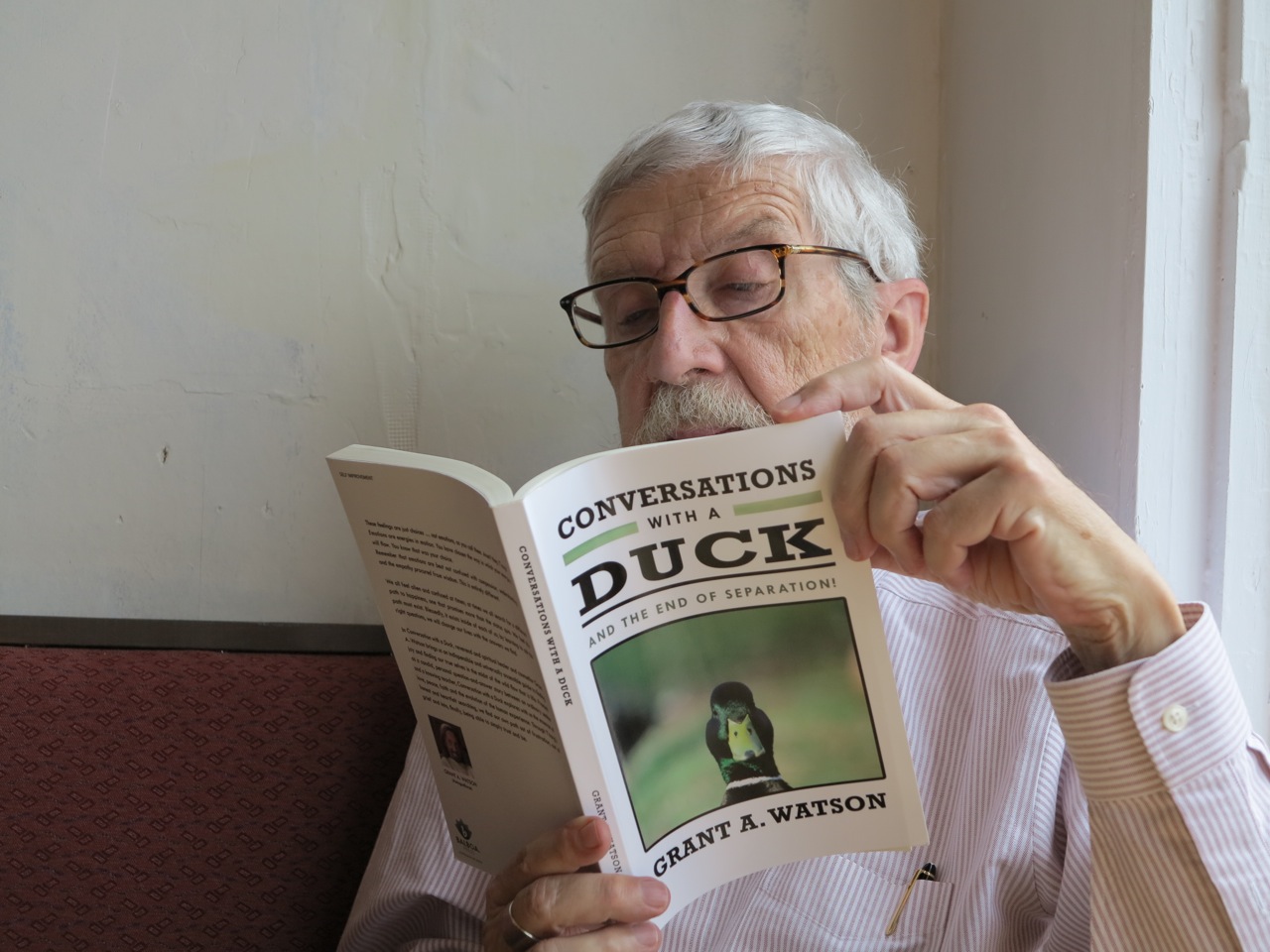
IMG_1780Sitting at the Black Duck Coffee House in Sackville, an Americano in hand, as I do everyday, my mind wanders off to all of time I have spent in cafes drinking espressos and thinking great thoughts or at least what passes in my mind as great thoughts. Granted sitting in cafes is a sure way of avoiding work, but as I am retired from the workaday world and, in my past profession, as a professor of fine arts, wasn’t really work as most people know it. The state paid me for my gift of gab and it did keep me off the street where I might have caused trouble for them. I think the first time I really discovered the joys of cafe sitting was in the early 1950s in Paris where, as an impressionable teenager, I found myself sitting at a table at Cafe de la Prix drinking real coffee instead of what passed for coffee in America at the time. Even at 14 years of age the French were more than happy to sell me glass of wine which was even better than the good coffee. It was right there and then I decided to be an artist.

Certainly the blue striped shirt and beret I purchased along with strong French smokes and teenage fantasies of sex with French women helped complete the image. I thought where would French art be without cafes? All of that good thinking served me well when, a few years later, I started art school in San Francisco and found a job in North Beach to help pay the cost. Now I was an adult, or at least a semi-adult, and could pass in the tourists’s eyes as a Beatnik. There I sat in Mike’s Place in all my glory. While that was over fifty years ago, I am still sitting in cafes trying to figure out the meaning of life. What is it about coffee houses that bring out the philosophers in us?

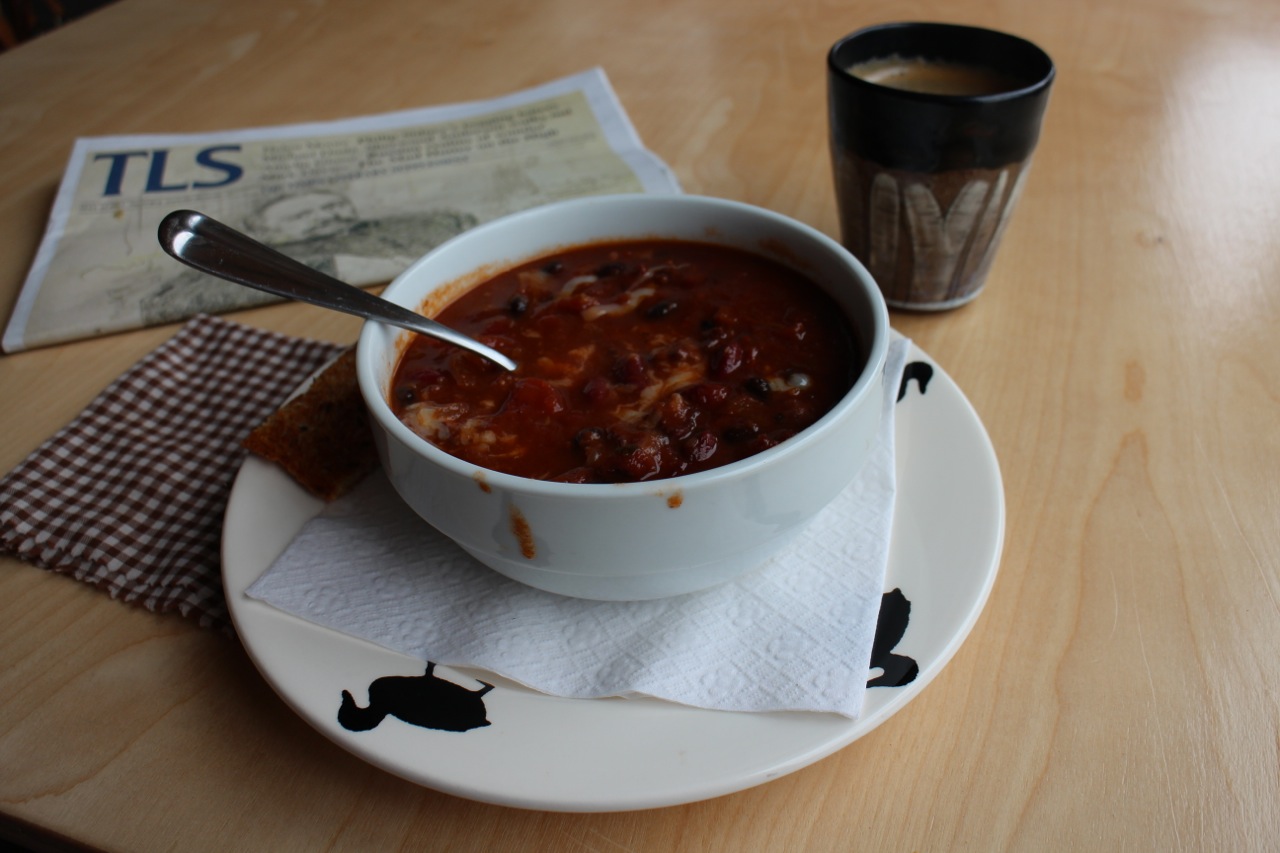
IMG_0083I like to think of myself as a sitting intellectual here at the Duck; I do subscribe to the TLS after all and besides that standing is too painful at seventy-four years old. I am not alone at my cafe, as happened in other cafes in my life, there are a regular cast of characters that share my table; a couple of fellow codgers; younger self-employed people who need to talk to real people once an awhile; local artists who have the same need and, sometimes, university students. The real change in the world of cafe sitting over the last half century which may turn out to be its ruin is technology. Looking around the cafe, everybody’s nose is into their laptops, pads and smart phones connected to the world, but disconnected to the person on the other side of their table. In many cafes, but not the Duck, than God, there is loud music which make conversation painful if not impossible. I too have all of toys: smart phone, iPad, iMac and I am firmly connected to the web or I wouldn’t be using this forum for my musings.

I am not asking for a return to postwar French cafe society or Beat times in San Francisco although they were fun and I was glad to be there. (I would not mind a return to my twenty-five year old body, but I would keep my mind, until it fails, as it is.) I do believe what we do need is a time to sit for an hour or two in a quiet cafe, drink really good coffee and read, talk or just stare blankly into space. The latter used to work in San Francisco when I was trying to look poetic and draw the attention of women. Now they just think that I am just suffering from memory loss.

The day often begins arguing with another curmudgeon, a retired copywriter, on a subject that both agree on. We wouldn’t want agreement getting in the way of a good argument. Later, if it is a good day, we can argue with our younger middle aged friends about how books are being replaced by newer technologies. I having invested in several thousand books over my lifetime, am firmly convinced in the supremacy of books and don’t get me started about my collection of CDs and vinyl compared to iTunes and MP3s. The morning slips into afternoon and lunch. It’s a wonder that I ever find time to write.

I am writing this in my basement office buried in the fore-mentioned books which does give reason for me to get out to the Black Duck and talk to someone other than my dog Clover although she does give the impression of being engaged with the quality of my conversation, but that might have something to do with the high end dog food I bribe her with. Art is a cruel master and I do need real people to bore with my mastery of this tedious subject, hence my need for a coffee house. Cafes have a rich history in providing outlets for artists, and those who want to be artists, to pose unanswerable questions to one another.

The difference between a coffee house and donut shop is about a buck a cup and they don’t try and chase you out after twenty minutes. A real coffee shop will give you coffee in a real cup not a cardboard one. In the case of the Black Duck Coffee House they have a high quality espresso machine and make very good coffee. It is also not a chain and the owners often sit down with the customers and give the impression that they find you interesting. There are other places like the ‘Duck‘ all over the world, but there is never enough of them. I have brought up the idea with the owners that after I die of being stuffed and placed in my favourite booth for coming generations to admire or, at the very least, have my ashes in a box at the counter, but there would always be the danger of someone stirring me into their coffee. Well, easy come, easy go and I really must be going for another cup of coffee.

© Virgil Hammock, Sackville NB Canada, Saturday, 25 May, 2013.